Serving All North Carolina
(704) 954-8697
Charlotte Truck Drivers Workers’ Compensation Lawyer
Truck drivers keep Charlotte’s economy moving. They put in long hours on the road and face a wide range of serious hazards unique to the trucking industry.
Unlike most other professions, truckers are constantly behind the wheel. That puts them at a higher risk of injury, both on the road and off it.
If you drive an over-the-road truck or other commercial truck for a living, you face serious risks every day. You can be injured on the road, at the docks, or anywhere in between. Being injured far from home or your employer’s base can complicate your workers’ compensation claim.
If you were injured during your trucking job in Charlotte, Waple & Houk, PLLC is ready to help. Contact us for a free case review.
Injured While Driving or Handling a Load?
A work injury can happen on the highway, at a loading dock, or hundreds of miles from home. Talk with Waple & Houk about your workers’ compensation options.
Discuss Your ClaimWhat Is Workers’ Compensation for Truckers?

Workers’ compensation for truckers covers commercial and OTR truck drivers injured on the job, not just in road accidents. It applies to injuries at loading docks, during cargo handling, in parking lots, and anywhere a driver is performing job duties. North Carolina requires most employers with three or more employees to carry this coverage.
The system is no-fault. You do not need to prove your employer was negligent. Your employer and their insurer are responsible for your medical treatment costs and a portion of your lost wages for qualifying injuries. A Charlotte truck driver workers’ compensation lawyer can explain the specific North Carolina workers’ compensation benefits you may be entitled to during a free initial case review.
Keep in mind that collecting workers’ compensation benefits generally means you cannot also seek compensation from your employer through a personal injury claim. In some cases, however, an injured driver can file a personal injury suit against a third party whose negligence caused the injury. A Charlotte truck driver work injury attorney can evaluate whether any third-party options exist.
Challenges in Workers’ Compensation for Truck Drivers
Truck driver workers’ compensation claims involve complications that most other workplace injury claims do not. Understanding these issues before filing can protect your rights.
Injuries Far From Home
Over-the-road and long-haul truck drivers often suffer injuries hundreds of miles from Charlotte and far from their employer’s base of operations. This creates real complications. You may need to seek treatment from an out-of-network provider before you can reach an approved physician. The injury report may need to travel through multiple layers of dispatch and management before it reaches the right people. Documentation can be harder to gather when an accident happens in another state.

North Carolina workers’ compensation law still applies to injuries suffered by North Carolina-based drivers, even when the accident occurs out of state. However, these situations require careful handling from the start. Truck driver workers’ comp attorneys familiar with interstate trucking claims can help you navigate these complications from day one.
Loading Dock and Cargo Handling Injuries
Not all truck driver injuries happen on the road. A significant number occur at loading docks, freight yards, and distribution facilities during loading and unloading operations. Many of these same risks also affect local route drivers, couriers, and other workers who transport packages and goods throughout the Charlotte area. These injuries include:
- Falls from dock height to ground level
- Being struck by moving dock equipment or forklifts
- Crush injuries from shifting or falling cargo
- Back and shoulder injuries from manual freight handling
- Slip and fall accidents on wet or debris-covered dock surfaces
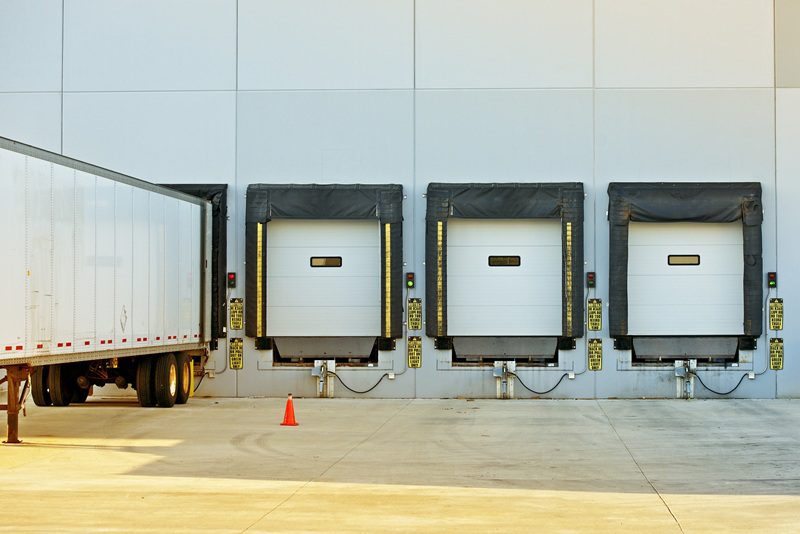
These incidents are fully covered under workers’ compensation regardless of whether the dock is operated by your employer or a third party. Liability questions can be complex when a driver is injured at a facility they do not work at directly. A truck driver workers’ comp attorney in Charlotte can evaluate all available options.
Violence and Assault on the Road
Truck drivers face elevated risks of robbery, carjacking, and physical assault, particularly on overnight routes and at unsecured stops. Injuries resulting from violence during the course of employment are covered under North Carolina workers’ compensation law. These claims are sometimes disputed by insurers who argue the assault did not arise from job duties. Documentation of the route, the cargo, and the circumstances of the stop is critical in these cases.
Common Injuries to Truck Drivers
According to the Bureau of Labor Statistics, there were nearly 48,000 nonfatal injury and illness cases among private-sector heavy and tractor-trailer truck drivers in a recent reporting year.
Two Main Kinds of Injuries
Workers’ compensation covers two main categories of truck driver injuries: occupational injuries and traumatic injuries.

Occupational Injury
An occupational disease may develop over time due to work conditions. Repetitive stress injuries, chronic back conditions, and hearing loss are common examples for truck drivers.
Traumatic Truck Driver Injury
A traumatic injury can range from a concussion to a spinal cord injury, amputation, or traumatic brain injury. Trucking accidents that often result in traumatic injuries include rollovers, underride accidents, and incidents involving unsecured loads.
Other Common Trucking Injuries
Truck drivers also sustain knee injuries, shoulder injuries, and spinal cord injuries in accidents while driving for work. In severe cases, truck drivers may face amputation injuries or burn injuries requiring extensive treatment.
Some of the injuries that commonly occur in trucking accidents include:
- Broken bones
- Head trauma
- Spinal cord injuries
- Back and neck injuries
- Lacerations
- Internal organ injuries
- Seat belt injuries
- Rib and torso injuries
Truck drivers are also susceptible to repetitive stress injuries. These are typically caused by driving for prolonged periods and can cause pain, tingling, and numbness throughout the body.
Truck Driver Claims Can Get Complicated Fast
Questions about where the injury happened, your employment status, or whether you were on duty can affect your claim. Get guidance from a workers’ compensation attorney who understands trucking cases.
Contact UsWhat Should I Do if I’m Hurt at My Trucking Job?
Here is what to do if you were injured while doing your trucking job in Charlotte.
1. Notify Your Employer
Let your employer know you were hurt, preferably in writing. Send an email or letter explaining what happened and keep a copy for yourself. You must report your work injury within 30 days.
It is essential to report your injury to your employer immediately. This is especially important when a truck driving injury happens far from home.

2. Get to a Doctor as Soon as Possible
Seek medical attention right away. You need to visit one of your employer’s approved medical providers.
3. Keep a Written Record of Your Injury and Symptoms
Document the entire ordeal starting from the moment the injury occurred. Keep a journal to preserve critical details and maintain a consistent account of what happened. Keep copies of your medical records and any work restrictions.
4. Take Photos and Videos of the Injury if Possible
Photograph or record your injuries, no matter how minor they may seem. This strengthens your case and improves your chances of receiving the benefits you qualify for.

5. File a Workers’ Compensation Claim with the Help of an Attorney
In North Carolina, all workers’ compensation claims are handled by the North Carolina Industrial Commission. Workers have the responsibility to file a claim once they are hurt at work. Failing to do so promptly could permanently affect your right to compensation.
If your employer does not provide the necessary claim forms, you can file a claim independently. Contacting an experienced Charlotte workers’ compensation lawyer can help you take the time you need to rest and make a full recovery.
Key Deadlines and Legal Protections in North Carolina Workers’ Compensation
Workers’ compensation claims must be filed within two years from the date of injury in North Carolina. Missing this deadline can forfeit your right to benefits.
North Carolina law also prohibits employers from firing employees for filing a workers’ compensation claim. This protection is provided under the Retaliatory Employment Discrimination Act.
Steps for Filing a Workers’ Compensation Claim
A Charlotte trucking employee workers’ compensation attorney at Waple & Houk, PLLC will guide you through every step of the claims process.

- Report Your Injury to Your Supervisor You must report your injury to your employer within 30 days. Failure to provide this notice means your employer cannot initiate the claims process on your behalf.
- Attempt to Resolve the Claim Informally Resolving the claim informally can save time and costs for everyone involved. If you cannot reach a resolution with your employer or their insurance carrier, proceed to the next step.
- Contact a Qualified Attorney Many truck drivers who are injured at work misunderstand their rights under North Carolina’s workers’ compensation system. Claims are often unfairly denied or reduced because injured workers do not realize they are entitled to benefits. Lawyers for truck drivers at Waple & Houk, PLLC can explain your options and provide a free legal consultation.
- File Your Petition for Benefits If you cannot reach an agreement with your employer and their insurer, file a petition for benefits. This is a formal dispute of the insurance company’s decision. You must provide documentation showing the nature of your injury, the benefits you believe you are eligible for, and why the insurer’s decision is wrong. Your attorney can handle this on your behalf.
If your workers’ compensation claim is denied, you have the right to appeal within a limited time frame.
A Trucking Injury Can Put Your Paycheck on Hold
If an injury is keeping you off the road or limiting the work you can do, Waple & Houk can help you understand the benefits available through your workers’ compensation claim.
Speak With Our TeamWhat Are My Rights After an On-the-Job Injury?
You have the following rights under North Carolina workers’ compensation law:
- A right to workers’ compensation, regardless of immigration status
- A right to refuse an employer’s offer to pay outside of workers’ comp
- A right to receive workers’ comp benefits even if paid in cash
- A right to transport assistance, travel reimbursement, and a translator where necessary
- A right to continue medical treatment
- A right to hire a workers’ compensation lawyer
- A right to dispute a denied claim
What Can I Do if My Claim Is Denied?
Workers’ compensation claims can be denied for various reasons. Common reasons include lack of evidence or disputes about whether an injury was work-related. Insurers sometimes argue that a condition is not connected to job duties.
If your workers’ comp claim is denied, you can appeal with the help of an attorney. At Waple & Houk, PLLC, we develop a legal strategy to challenge the insurance company’s decision and pursue the benefits available under North Carolina law.
North Carolina Industrial Commission
You can appeal a denied claim before the North Carolina Industrial Commission. The Commission administers the North Carolina Workers’ Compensation Act and acts as the forum for resolving workers’ compensation disputes.
When you receive a denial letter, contact a Charlotte truck driver workers’ compensation lawyer as soon as possible to understand your legal options.
What if I Am an Independent Contractor?
In North Carolina, independent contractors generally do not qualify for workers’ compensation benefits. This is why some trucking companies try to categorize their drivers as contractors to avoid paying compensation and insurance premiums. This misclassification issue is especially common in the trucking industry.

The distinction between a company driver and an owner-operator matters significantly. Company drivers who drive employer-owned trucks, follow set routes and schedules, and are paid by the hour or mile are almost certainly employees. Owner-operators who own their trucks, set their own schedules, and contract with multiple carriers have a stronger argument for independent contractor status. However, many owner-operators are misclassified. Even drivers who are called independent contractors may actually be employees under North Carolina law if the trucking company exercises sufficient control over how the work is performed.
Several factors determine the employment status of truck drivers. The primary factor is the employer’s level of control over the driver’s work. Questions to consider include:
- Does the company control the driver’s routes, schedule, and working hours?
- Does the company require specific equipment, branding, or uniforms?
- Is the driver economically dependent on a single carrier?
- Does the company set the rates charged to customers?
- Can the driver hire assistants or subcontract work?
- Is the driver paid by the mile, by the hour, or at a fixed rate per load?
If a trucking company controls what you haul, when you haul it, and how the job is performed, you may be an employee regardless of what your contract says. A commercial driver lawyer in North Carolina can evaluate your employment status and advise whether you qualify for workers’ compensation coverage.
How Can a Workers’ Comp Attorney Help Me?

Working with an experienced attorney can significantly improve your chances of receiving the benefits you deserve. Truck driver workers’ comp lawyers at Waple & Houk, PLLC can help with:
- Case Preparation: We collect relevant records and conduct thorough investigations to build your claim. We organize medical documentation and work-related evidence to support your petition.
- Settlement Negotiations: Our attorneys negotiate with the insurance carrier to pursue appropriate benefits based on your work restrictions and medical status.
- Appealing Denied Claims: We review the denial, gather supporting information, and help you request a hearing before the Industrial Commission when appropriate.
- Representation at Hearings: If your claim is denied, we represent you at hearings before the Industrial Commission.
Evidence That Matters in Truck Driver Workers’ Compensation Cases
Truck driver injury claims often involve categories of evidence that do not exist in other workplace injury cases. Acting quickly to preserve this evidence can be critical to the outcome of your claim.
Key evidence in trucking cases includes:
- Electronic logging device (ELD) data: ELD records show hours of service, driving patterns, and vehicle location at the time of an incident. This data can establish where and when an injury occurred and whether the driver was on duty.
- Black box data: Event data recorders capture speed, braking, steering input, and other vehicle data around the time of an accident. This information can corroborate or contradict an insurer’s account of how an incident occurred.
- Driver logs and dispatch records: These establish the scope of employment at the time of injury. They are particularly important when an insurer argues the driver was off duty or outside the course of employment.
- Maintenance records: Equipment failures that contribute to accidents can support a workers’ compensation claim. They may also open the door to third-party liability claims against manufacturers or maintenance providers.
- Cargo and manifest records: These document what was being hauled and where, which can be relevant to loading dock injuries and cargo-related incidents.
This data is often overwritten or deleted quickly after an incident. Contacting an attorney promptly gives us the best opportunity to preserve critical evidence before it is lost.

Key Considerations in Choosing a Charlotte Truck Driver Work Injury Lawyer
When choosing an attorney, look for a strong track record, thorough knowledge of evidence gathering, and clear communication about fees. Choose an accessible lawyer with a good reputation and no history of disciplinary action.
In cases involving work-related crashes and workplace accidents, the attorney should understand the regulations that affect the investigation. This includes hours-of-service requirements, FMCSA rules, and North Carolina-specific workers’ compensation procedures.
Talk to a Charlotte Truck Driver Workers’ Compensation Lawyer Today

Being injured while doing your job can be a stressful experience. This is especially true for truck drivers. You must deal with your injuries, medical care, your employer, and the insurance company, all at the same time.
Knowing the law and your rights is half the battle. We represent Charlotte truck drivers and trucking employees working throughout the region, including those based in Huntersville, Cabarrus County, Hickory, and Concord. If you are searching for a workers’ comp attorney familiar with the commercial trucking industry, Waple & Houk, PLLC is ready to help. Contact us today to request your free case review.
Get Help With Your Truck Driver Workers’ Comp Claim
Whether you are dealing with medical treatment, missed work, a denied claim, or questions about your benefits, Waple & Houk can help you understand what comes next.
Schedule Your ConsultationFrequently Asked Questions in Trucking Workers’ Comp Cases
Does workers’ comp cover an accident that happens off duty or off the clock?
It depends on what you were doing at the time. If you were performing a job duty, such as loading cargo, conducting a pre-trip inspection, or waiting on dispatch instructions, the injury may still be covered even if your shift had technically ended. Insurers sometimes dispute these claims, so documenting what task you were performing when the injury happened can matter.
What if I was injured in another state while driving for a North Carolina company?
North Carolina workers’ compensation law can still apply to a North Carolina-based driver injured out of state, though the process may involve additional steps. Where treatment happens, how the injury is reported, and which state’s insurer is notified can all affect the claim. A commercial driver working across state lines should talk to an attorney early to avoid missing a filing requirement.
Can I still get benefits if my trucking company calls me an independent contractor?
Being labeled a 1099 contractor does not automatically disqualify you. North Carolina looks at how much control the company has over your schedule, routes, and equipment, not just what your contract says. Many owner-operators and company drivers who are told they are contractors may still qualify as employees under the law.
What if my employer or dispatcher disputes that my injury happened on the job?
Disputes like this are common, especially for OTR drivers, since dispatch records, ELD data, and route logs are often the deciding evidence. If your employer questions whether the injury occurred during a work task, preserving that data quickly can matter, since some of it may be overwritten or deleted within days. An attorney can help request and secure this evidence before it is lost.
Workers’ Compensation
And Family Lawyers
Providing
Strength In A
Time of Crisis
Call US now:






reviews
What Real Clients Have To Say
Melissa S.

Lou and his team did an outstanding job on my case. They kept me updated constantly. There were times when I was so overwhelmed-the encouragement I received from the firm is the BEST I’ve received from any law firm in the past. I HIGHLY recommend Lou and his team.
Tim J.
Great attorney helped the most at a important time.
Aimee B.
Lou and his team worked quickly to ensure that my husband received the care and physical therapy he needed after a pretty serious work injury. They handled every phone call and question with the insurance adjuster, we didn’t have to fight with anyone to get anything that was expected or promised. They communicated with us every step of the way, and they were especially responsive and helpful when my husband’s case required more than anyone had anticipated. Every person we have spoken with in Lou’s office were patient and respectful, we never felt like we...
Lucas J.
Very good people to work with! I highly recommend this law firm.
Dustin M.
I have never had a more pleasant experience with an attorney and their paralegals in my life!!! Hands down the best law firm in North Carolina, probably the whole country! Would definitely recommend them to anyone needing counsel. They are all so easy to get along with and friendly.... My employer lied, as many do in this situation but Lou and his team were quick to step in and get me the compensation I deserved! Thank you, from my whole family. Waple and Houk are #1
Darrin R.
Mr. Lou is by far the most compassionate attorney I’ve encountered and once again he helped me with a worker’s compensation claim and his paralegal was also great. Mr.Lou is very professional and he allows you room for your concerns and opinions, he’s just a great human being that doesn’t need to advertise his partnership law firm on tv just ask any of his past clients and they would totally agree with me, God forbid that I’m in a serious car accident but if I am he’s just a phone call away so if you...
Travis B.
Mr. Waple did a fantastic job on my case, even if I wasn't a lot of help he still came through and for that I thank you Mr. Waple.
Tara D.
I was at a point of despair & thought that my then employer would do the right thing. Lou’s honesty, and integrity; along with his guidance gave me the dose of reality that I needed to see the true colors of legality in corporate America. Without his savvy I would have been blindsided! Cherie, always responded to all of my responses, and nervous reactions and made sure Lou was aware of what was happening! Great firm, I would highly recommend to anyone who wants respect, honesty and guidance as a client!
Aunyette S.
Mr.Waple has handled both of my cases very well. I definitely recommend this team of professional lawyers and secretaries. Thank you!
Tashaun H.
My experience working with Lou was an absolute joy. From our very first conversation, he assured me that he would work relentlessly to help me secure adequate compensation for my case and he did just that. His paralegal, Cheri, was helpful with timely responses to any and all questions I had and she helped reduce the stress of a very tedious process. I highly recommend this firm for any future litigation and would love to work with them again if the opportunity arises.