Serving All North Carolina
(704) 954-8697
Charlotte Construction
Legally Reviewed by Attorney Lou Waple
Construction work is physically demanding and carries real risk. When an injury happens on a Charlotte job site, the workers’ compensation process can move slowly, but your bills do not. Insurers dispute claims, question injuries, and look for any reason to reduce what they pay.
With more than 30 years of experience, Waple & Houk, PLLC, represents injured construction workers in Charlotte and throughout Mecklenburg County. We help clients file claims, challenge denials, and pursue every benefit available under North Carolina workers’ compensation law. Construction work injury claims are on a deadline. Contact us today and protect your case before that window closes.
Construction Injuries and Workers’ Comp in Charlotte
Charlotte is in the middle of one of the largest construction booms in the country. According to local development reports, nearly $4 billion in projects are underway or breaking ground, with major activity concentrated in Uptown, South End, and University City. More construction activity means more workers on site, equipment in motion, and more opportunity for something to go wrong.

North Carolina recorded 43 construction fatalities in 2023, with falls accounting for nearly half of those deaths. Nonfatal injuries are far more common. They are the ones that send workers to the emergency room, keep them out of work for weeks or months, and generate the kind of medical bills that workers’ compensation is supposed to cover.
North Carolina requires most employers with three or more employees to carry workers’ compensation insurance. The system is no-fault, meaning you do not need to prove your employer was negligent. You only need to show the injury happened in the course of your employment. For most construction site injuries, that threshold is not difficult to meet. What becomes difficult is getting the insurer to pay fairly and promptly.
Common Construction Site Injuries We Handle
Construction workers face a range of hazards that most other workers do not. The injuries that result can be serious, and many require extended treatment and time away from work.
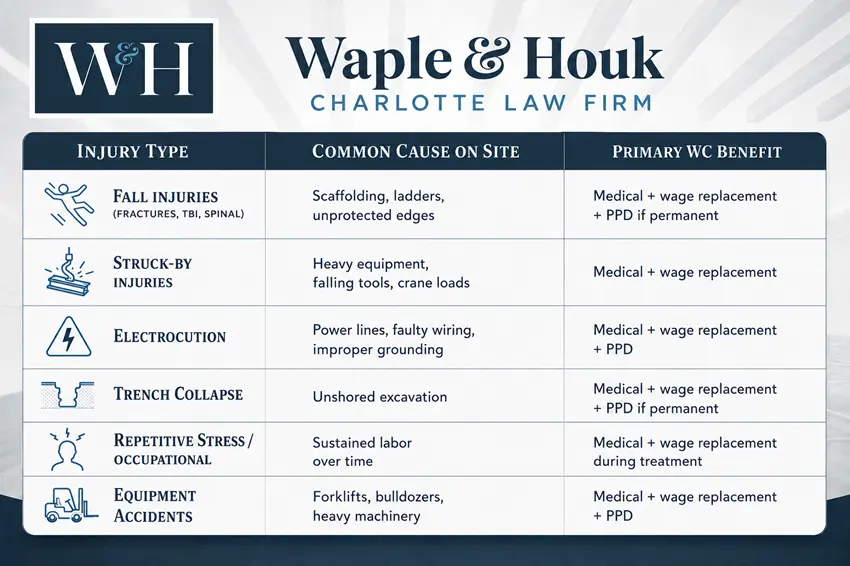
- Falls from scaffolding, ladders, roofs, and elevated platforms
- Struck-by accidents involving heavy equipment, falling tools, or swinging crane loads
- Electrocution from power lines, faulty wiring, or improper grounding
- Trench collapses during excavation work
- Equipment accidents involving forklifts, bulldozers, and other heavy machinery
- Scaffolding collapses from improper assembly or overloading
- Repetitive stress injuries from sustained physical labor
- Burns and respiratory conditions from hazardous materials on site
What Workers’ Compensation Covers for Construction Workers
North Carolina workers’ compensation provides several categories of benefits for injured construction workers. Understanding what you are entitled to is the starting point for evaluating whether your claim is being handled fairly.
Medical Benefits
Benefits cover all necessary medical treatment related to a covered construction work injury, such as doctor visits, hospital stays, surgeries, physical therapy, medications, and follow-up care. There are no copays and no deductibles. Treatment must come from your employer’s designated medical provider, though emergency care is covered regardless of provider. Mileage reimbursement is available for medical travel exceeding 20 miles.
Wage Replacement Benefits
While you are unable to work, workers’ compensation pays two-thirds of your average weekly wage, up to a state-set maximum. If you earned $900 per week, your wage replacement benefit would be $600 per week. These benefits begin after a waiting period and continue through your period of disability as determined by an authorized medical provider.

Permanent Partial Disability
If your injury results in a permanent impairment, North Carolina law provides compensation based on the affected body part and the degree of impairment. Examples of scheduled benefits under state law include:
- Loss of an arm: 240 weeks of compensation
- Loss of a leg: 200 weeks
- Loss of a thumb: 75 weeks
- 25% permanent impairment to an arm: 60 weeks (25% of 240)
If your impairment affects your capacity to work in a way that is not covered by the scheduled benefit, additional compensation may be available. A Charlotte construction work injury attorney can evaluate the full value of your permanent impairment claim based on your specific injury and work history.
Vocational Rehabilitation
Construction injuries sometimes end a worker’s ability to return to the same trade. When a serious injury prevents you from doing the physical work your job requires, North Carolina workers’ compensation may provide vocational rehabilitation services to help you qualify for other work. We help clients navigate that process when it becomes part of their claim.
Why Construction Workers’ Comp Claims Get Denied
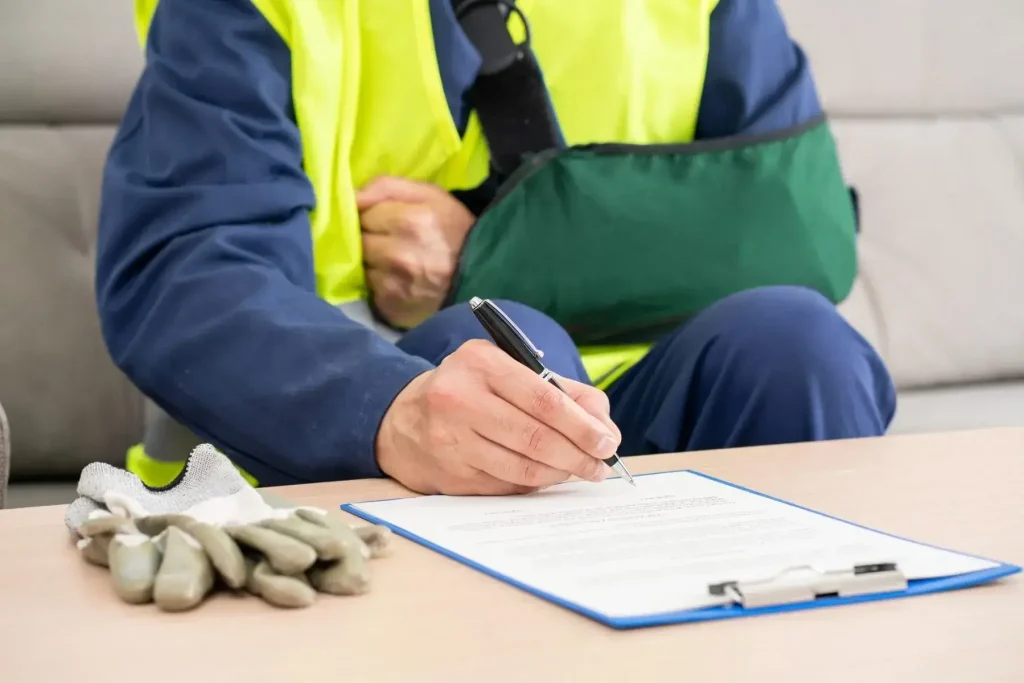
A denial is not the end of a claim, but it needs to be addressed promptly. The North Carolina Industrial Commission sets deadlines for appeals, and missing them can forfeit your right to benefits. Common denial reasons in construction cases include:
- Disputed work relationship. Insurers argue the injury did not happen during the course of employment.
- Pre-existing condition arguments. If you have any prior back, shoulder, or joint history, the insurer may attempt to attribute your injury entirely to a pre-existing condition.
- Late reporting. North Carolina requires injury reporting within 30 days. Delays give insurers grounds to dispute whether the injury happened as described.
- Independent contractor misclassification. Some construction companies classify workers as 1099 contractors to avoid carrying workers’ compensation coverage. North Carolina law looks at the actual working relationship, not the label. If your employer controlled your work, your schedule, and how the job was performed, you may be an employee regardless of how you were paid.
- Incomplete medical documentation. Gaps between the injury event and medical records, inconsistencies in documented symptoms, or failure to follow through with treatment can give an insurer grounds to reduce or deny benefits.
A denied claim is not a closed one. Reach out to our team, and we will review what happened and what your options are.
What to Do After a Construction Site Injury in Charlotte
The steps you take after a job site injury directly affect the outcome of your claim. Follow these in order and do not skip the early ones, even if the injury seems manageable at first.
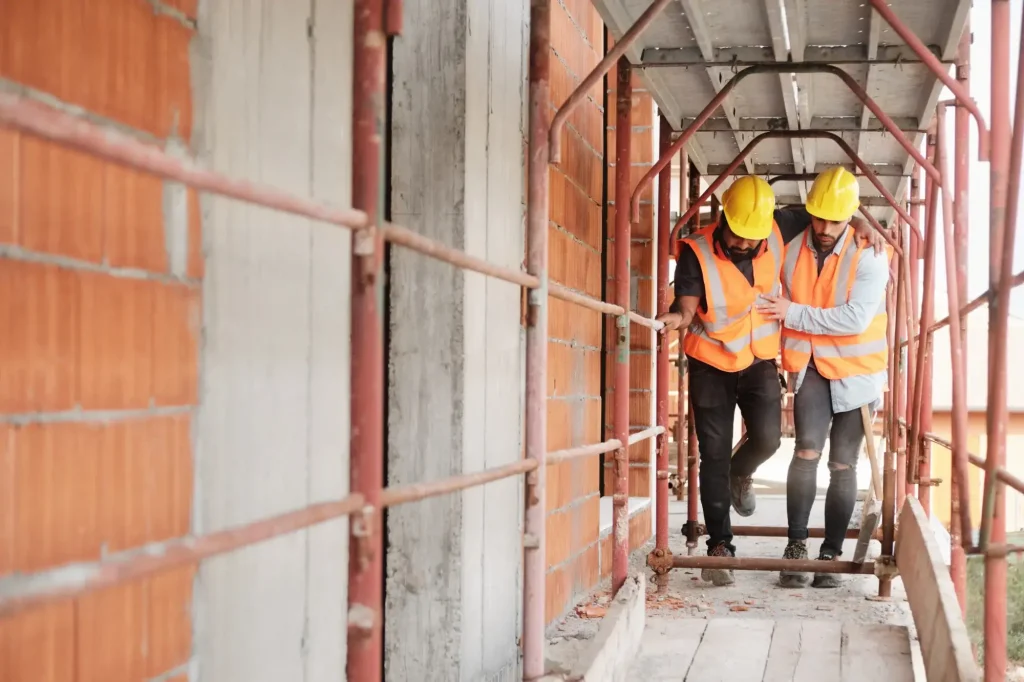
- Get medical attention. Some construction injuries, particularly head trauma, internal injuries, and spinal conditions, do not present their full severity immediately. Seek care and make sure the injury is documented.
- Report the injury to your employer in writing. You must notify your employer within 30 days under North Carolina law. Do it in writing, keep a copy, and be specific about what happened, where it happened, and what hurts.
- Document the scene. Photograph the accident location, any equipment involved, and your injuries. Get names and contact information for any witnesses before the site changes or crew rotates.
- Treat with an approved provider. Workers’ compensation generally requires treatment from your employer’s designated physician. Emergency care is an exception, but follow-up care through an approved provider is required for benefits to apply.
- Do not give a recorded statement to the insurance adjuster without counsel. Adjusters are trained to ask questions that can be used to reduce your claim. You are not required to give a recorded statement before consulting a construction work injury lawyer.
- File your claim with the North Carolina Industrial Commission. You have two years from the date of injury to file. Waiting creates risk, but our Charlotte workers’ compensation lawyers can help.
The Independent Contractor Question in Construction
Misclassification is one of the most common problems we see in construction workers’ comp claims. General contractors and subcontractors sometimes classify workers as independent contractors to avoid workers’ compensation premiums.
North Carolina applies a multi-factor test that looks at the actual working relationship. Factors include whether the company set your schedule, whether you worked exclusively for one contractor, whether you provided your own tools, and whether the company had the right to direct and control your work methods. If those factors point toward employment, the misclassification can be challenged, and workers’ compensation coverage can be established.
Construction companies and their insurers fight misclassification arguments because the stakes are significant. Having a Charlotte construction work accident lawyer handle that aspect of your claim from the start puts you in a much stronger position.
Evidence That Matters in Construction Work Injury Claims
Construction sites generate documentation that can support or undermine a workers’ compensation claim. Moving quickly to preserve that evidence matters.
Site photos and video taken before the scene is cleaned up or altered are often the most valuable early evidence. OSHA inspection reports document conditions and violations at the time of the incident. Daily logs and superintendent records establish who was on site, what work was being performed, and what equipment was in use. Subcontractor agreements and site safety plans identify which party had responsibility for specific conditions.
Medical records need to be consistent and complete from the first treatment. Gaps or inconsistencies between the incident and documented symptoms give insurers an opening to dispute the injury. We help clients organize and protect their medical documentation throughout the claim.
Working with Our Charlotte Construction Workers’ Compensation Attorneys

We handle construction workers’ compensation claims on a contingency fee basis. You pay no attorney fees unless we recover benefits for you. That structure exists so that cost is not a barrier to getting representation, and it aligns our interest entirely with yours.
Our attorneys at Waple & Houk, PLLC, handle your case directly. You will not spend weeks waiting for a return call or find yourself dealing exclusively with intake staff. Direct attorney access makes a real difference when a claims question comes up, or an insurer tries to move the process in a direction that is not in your interest.
Charlotte’s construction activity is concentrated in some of the most active development corridors in the Southeast. Workers on sites in South End, Uptown, and the University City corridor are building projects that will define this city for decades. When one of those workers is injured, they deserve representation that takes the claim as seriously as the work they were doing. That is what we do.
If you were injured on a Charlotte construction site, we are ready to help. Your rights under North Carolina workers’ compensation law are worth protecting. Contact Waple & Houk, PLLC today for a free, no-obligation case review.
Workers’ Compensation
And Family Lawyers
Providing
Strength In A
Time of Crisis
Call US now:






reviews
What Real Clients Have To Say
Melissa S.

Lou and his team did an outstanding job on my case. They kept me updated constantly. There were times when I was so overwhelmed-the encouragement I received from the firm is the BEST I’ve received from any law firm in the past. I HIGHLY recommend Lou and his team.
Tim J.
Great attorney helped the most at a important time.
Aimee B.
Lou and his team worked quickly to ensure that my husband received the care and physical therapy he needed after a pretty serious work injury. They handled every phone call and question with the insurance adjuster, we didn’t have to fight with anyone to get anything that was expected or promised. They communicated with us every step of the way, and they were especially responsive and helpful when my husband’s case required more than anyone had anticipated. Every person we have spoken with in Lou’s office were patient and respectful, we never felt like we...
Lucas J.
Very good people to work with! I highly recommend this law firm.
Dustin M.
I have never had a more pleasant experience with an attorney and their paralegals in my life!!! Hands down the best law firm in North Carolina, probably the whole country! Would definitely recommend them to anyone needing counsel. They are all so easy to get along with and friendly.... My employer lied, as many do in this situation but Lou and his team were quick to step in and get me the compensation I deserved! Thank you, from my whole family. Waple and Houk are #1
Darrin R.
Mr. Lou is by far the most compassionate attorney I’ve encountered and once again he helped me with a worker’s compensation claim and his paralegal was also great. Mr.Lou is very professional and he allows you room for your concerns and opinions, he’s just a great human being that doesn’t need to advertise his partnership law firm on tv just ask any of his past clients and they would totally agree with me, God forbid that I’m in a serious car accident but if I am he’s just a phone call away so if you...
Travis B.
Mr. Waple did a fantastic job on my case, even if I wasn't a lot of help he still came through and for that I thank you Mr. Waple.
Tara D.
I was at a point of despair & thought that my then employer would do the right thing. Lou’s honesty, and integrity; along with his guidance gave me the dose of reality that I needed to see the true colors of legality in corporate America. Without his savvy I would have been blindsided! Cherie, always responded to all of my responses, and nervous reactions and made sure Lou was aware of what was happening! Great firm, I would highly recommend to anyone who wants respect, honesty and guidance as a client!
Aunyette S.
Mr.Waple has handled both of my cases very well. I definitely recommend this team of professional lawyers and secretaries. Thank you!
Tashaun H.
My experience working with Lou was an absolute joy. From our very first conversation, he assured me that he would work relentlessly to help me secure adequate compensation for my case and he did just that. His paralegal, Cheri, was helpful with timely responses to any and all questions I had and she helped reduce the stress of a very tedious process. I highly recommend this firm for any future litigation and would love to work with them again if the opportunity arises.