Serving All North Carolina
(704) 954-8697
Cabarrus County Workers’ Compensation Lawyer
A workplace injury can turn your life upside down overnight. Medical bills stack up, paychecks stop, and suddenly, you are trying to navigate a claims process while you are still in pain. If you were hurt on the job in Cabarrus County, you have legal rights, and you do not have to figure them out alone. Tell us what happened, and we will help you understand what you are owed.
Workers’ Compensation Rights in Cabarrus County

North Carolina law requires most employers to carry workers’ compensation insurance. When a workplace injury occurs, that coverage is supposed to pay for your medical treatment and replace a portion of your lost wages while you recover. In practice, the process is rarely that simple.
Insurance companies move quickly after a claim is filed. They gather information, evaluate liability, and make decisions that affect your benefits, often before you have had a chance to talk to anyone on your side. A Cabarrus County workers’ compensation attorney levels the playing field.
Waple & Houk, PLLC, has represented injured workers across the greater Charlotte region for more than 30 years. We know how carriers operate, what they look for, and where claims tend to go wrong. Our job is to make sure yours does not.
Injuries We Handle for Cabarrus County Workers
Workplace injuries in Cabarrus County happen across a wide range of industries. Manufacturing, construction, healthcare, and distribution work all carry real risks. So does warehouse and office work, where repetitive strain and slip-and-fall accidents are more common than most people realize.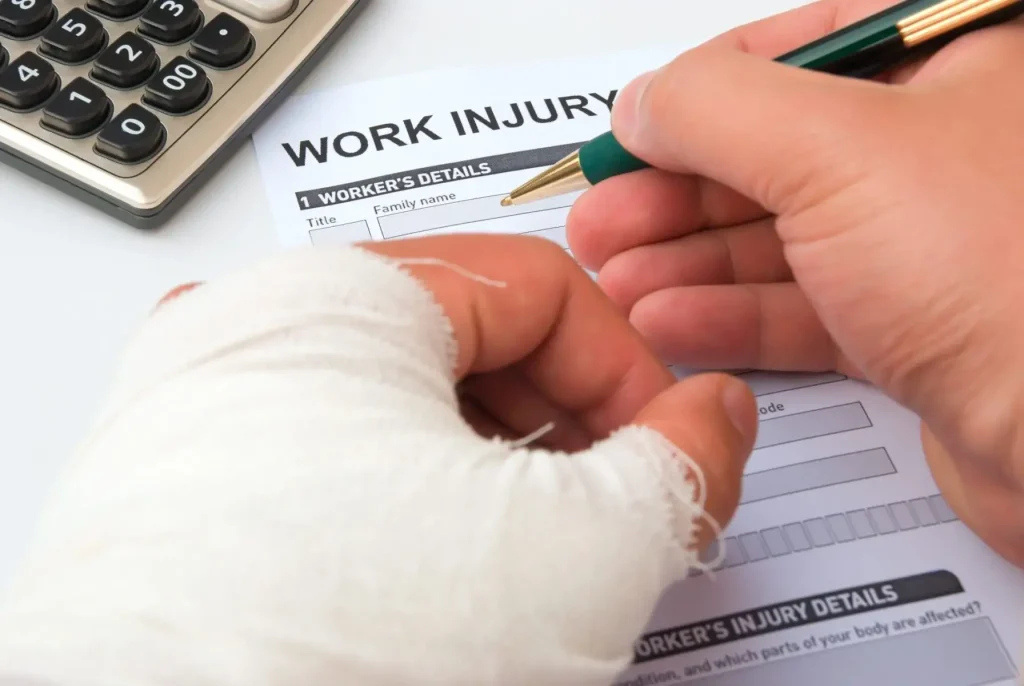
Our workers’ compensation attorneys handle claims involving:
- Broken bones and fractures
- Back and neck injuries
- Traumatic brain injuries
- Repetitive stress injuries, including carpal tunnel
- Burns and lacerations
- Occupational illnesses and chemical exposure
- Hearing loss from workplace noise
- Injuries resulting in permanent disability
If your injury happened on the job in Cabarrus County, it likely qualifies for workers’ comp coverage, even if your employer is disputing it. Many denied claims are successfully appealed. Do not assume a denial is the final word.
Construction and Scaffolding Accidents

Concord in Cabarrus County has grown into one of the county’s busiest hubs for warehouse and distribution work, alongside significant construction growth in recent years. That growth comes with real risk. Falls from height, equipment failures, and struck-by accidents are among the leading causes of serious construction injuries in North Carolina, and we regularly see fractures and crush injuries among Concord’s warehouse workers as well. Workers injured on construction sites may have claims under both workers’ compensation and third-party liability, depending on who was responsible. Our construction accident attorneys understand both pathways and can identify every source of recovery available to you. For workers hurt in falls from scaffolding or elevated platforms, our team handles scaffolding accident claims with the level of detail those cases require. If you were hurt on the job, our Concord workers’ compensation attorneys can walk you through what comes next.
Truck Drivers and Delivery Workers
Cabarrus County sits along several major freight corridors, and many residents work in transportation and delivery. These workers face a distinct set of risks, from highway accidents to loading dock injuries. Truck driver workers’ comp claims involve additional complications around employment classification and coverage that general practitioners often miss.
The same applies to delivery drivers working for carriers or gig platforms. If your injury happened while you were working, coverage may apply even if your employer has told you otherwise.
Warehouse and Healthcare Workers

Cabarrus County has a significant warehouse and distribution workforce, particularly near the I-85 corridor in towns like Kannapolis. We regularly see lifting injuries, forklift accidents, and a high volume of hand and wrist injuries among Kannapolis workers, often tied to repetitive stress from assembly line or production work. Our attorneys represent warehouse workers throughout Cabarrus County and know how to document and pursue these claims effectively.
Healthcare workers face a different but equally serious set of risks: needle sticks, patient-handling injuries, and exposure to infectious illnesses. These claims require careful handling because the injury is not always immediately visible, and delays in reporting can create complications.
How the Workers’ Comp Process Works in NC
Understanding the process helps you protect yourself from the start. Here is what typically happens after a workplace injury in North Carolina:
- Report the injury to your employer as soon as possible. North Carolina law gives you 30 days to report, but waiting creates problems. Report immediately.
- Seek medical treatment through your employer’s designated provider. Going outside that network without approval can jeopardize your claim.
- Your employer notifies their insurer, who opens a claim file and begins evaluating coverage.
- The insurer accepts or denies the claim within a set window. If accepted, benefits begin. If denied, you have the right to appeal.
- Medical treatment and wage replacement continue during recovery, subject to the insurer’s ongoing review.
- A settlement or hearing resolves the claim once you reach maximum medical improvement.
Our attorneys can assist at any stage. Many clients come to us after a denial or after realizing the insurer is not handling their claim fairly. If you have already filed and things are not going well, it is not too late to get help. Our team handles disputed workers’ comp claims and can step in wherever the process has stalled.
What Workers’ Comp Benefits Cover
A lot of injured workers underestimate what their claim can actually cover. North Carolina workers’ compensation benefits include more than just hospital bills.
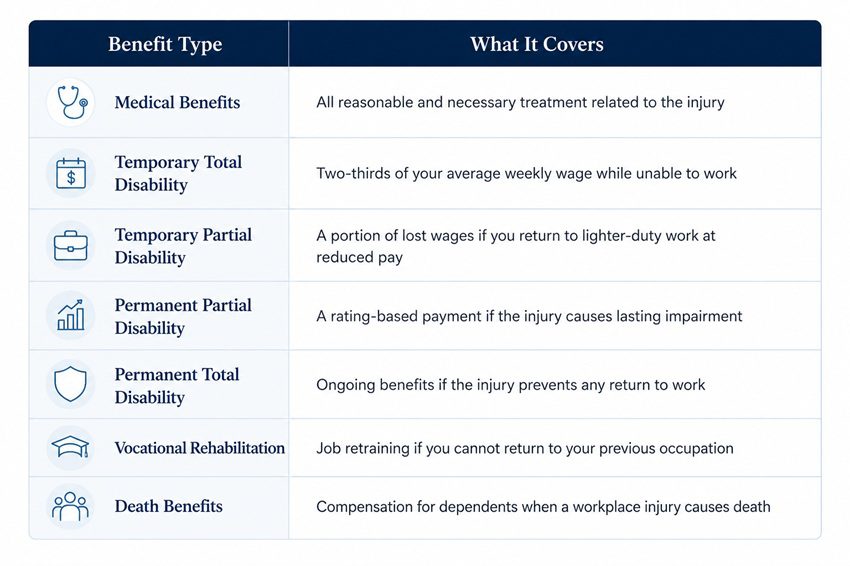
Understanding which benefits apply and how to document your claim to maximize them is where having an attorney makes a real difference. If you have questions about what your injury qualifies for, reach out to our team for a workers’ comp consultation.
Common Reasons Cabarrus County Claims Are Denied
A denial does not mean your claim is invalid. It often means the insurer found a reason, valid or not, to avoid paying. Common denial reasons include:
- The employer claims the injury did not happen at work
- Reporting was delayed beyond the 30-day window
- The insurer argues the injury is a pre-existing condition
- Medical documentation does not clearly connect the injury to the job
- A drug or alcohol test came back positive at the time of the incident
Each of these can be challenged. North Carolina workers’ compensation law provides a formal appeals process, and many denied claims are successfully reversed. According to the North Carolina Rate Bureau, workers’ comp claims totaling hundreds of millions of dollars are litigated in the state each year, and outcomes frequently depend on whether the injured worker had legal representation.
Our attorneys understand the full claims process, including how to build and present an appeal. If your claim has been denied, do not wait to get help.
Reporting Requirements You Need to Know
North Carolina requires injured workers to report the injury to their employer within 30 days. Waiting, even for a week or two, gives insurers room to question whether the injury actually happened at work. The injury reporting process has specific requirements, and missing a step can cost you benefits you would otherwise be entitled to.
If you are unsure whether you reported correctly, or if your employer is pressuring you not to file, that is a conversation to have with an attorney as soon as possible.
Maximum Medical Improvement and Settlements

At some point in your recovery, your treating physician will determine that you have reached maximum medical improvement, meaning you have recovered as much as you are expected to. This is a pivotal moment in any workers’ comp case. It triggers the evaluation of any permanent impairment rating and sets the stage for settlement negotiations.
Settlements can be structured in different ways. Some involve a lump-sum payment that closes out your claim entirely. Others preserve future medical benefits while settling the wage-loss portion. The right structure depends on your specific situation, including how severe your injury is, whether you can return to work, and what your long-term medical needs look like.
Accepting a settlement without legal advice is one of the most common mistakes injured workers make. Once a settlement is signed, it is very difficult to reopen the claim.
Serving Injured Workers Throughout Cabarrus County

Waple & Houk, PLLC, represents workers’ comp clients in Cabarrus County from our Charlotte office at 1212 Kenilworth Ave, just a short drive from Concord.
Cabarrus County communities we regularly serve include Concord, Kannapolis, Harrisburg, Midland, and Mount Pleasant. Wherever you live or work in the county, we can help.
If you were hurt on the job and are not sure what to do next, the best first step is a conversation. Schedule a workers’ compensation consultation with our team and get straight answers about where your claim stands.
Workers’ Compensation
And Family Lawyers
Providing
Strength In A
Time of Crisis
Call US now:






reviews
What Real Clients Have To Say
Melissa S.

Lou and his team did an outstanding job on my case. They kept me updated constantly. There were times when I was so overwhelmed-the encouragement I received from the firm is the BEST I’ve received from any law firm in the past. I HIGHLY recommend Lou and his team.
Tim J.
Great attorney helped the most at a important time.
Aimee B.
Lou and his team worked quickly to ensure that my husband received the care and physical therapy he needed after a pretty serious work injury. They handled every phone call and question with the insurance adjuster, we didn’t have to fight with anyone to get anything that was expected or promised. They communicated with us every step of the way, and they were especially responsive and helpful when my husband’s case required more than anyone had anticipated. Every person we have spoken with in Lou’s office were patient and respectful, we never felt like we...
Lucas J.
Very good people to work with! I highly recommend this law firm.
Dustin M.
I have never had a more pleasant experience with an attorney and their paralegals in my life!!! Hands down the best law firm in North Carolina, probably the whole country! Would definitely recommend them to anyone needing counsel. They are all so easy to get along with and friendly.... My employer lied, as many do in this situation but Lou and his team were quick to step in and get me the compensation I deserved! Thank you, from my whole family. Waple and Houk are #1
Darrin R.
Mr. Lou is by far the most compassionate attorney I’ve encountered and once again he helped me with a worker’s compensation claim and his paralegal was also great. Mr.Lou is very professional and he allows you room for your concerns and opinions, he’s just a great human being that doesn’t need to advertise his partnership law firm on tv just ask any of his past clients and they would totally agree with me, God forbid that I’m in a serious car accident but if I am he’s just a phone call away so if you...
Travis B.
Mr. Waple did a fantastic job on my case, even if I wasn't a lot of help he still came through and for that I thank you Mr. Waple.
Tara D.
I was at a point of despair & thought that my then employer would do the right thing. Lou’s honesty, and integrity; along with his guidance gave me the dose of reality that I needed to see the true colors of legality in corporate America. Without his savvy I would have been blindsided! Cherie, always responded to all of my responses, and nervous reactions and made sure Lou was aware of what was happening! Great firm, I would highly recommend to anyone who wants respect, honesty and guidance as a client!
Aunyette S.
Mr.Waple has handled both of my cases very well. I definitely recommend this team of professional lawyers and secretaries. Thank you!
Tashaun H.
My experience working with Lou was an absolute joy. From our very first conversation, he assured me that he would work relentlessly to help me secure adequate compensation for my case and he did just that. His paralegal, Cheri, was helpful with timely responses to any and all questions I had and she helped reduce the stress of a very tedious process. I highly recommend this firm for any future litigation and would love to work with them again if the opportunity arises.