Serving All North Carolina
(704) 954-8697
What Happens After an Amputation Injury on the Job?
Connect With Us
20Aug
Losing a finger, hand, or limb changes daily life immediately, long before any paperwork gets filed. Getting dressed, driving, holding a child, or doing the job that provided a paycheck the day before can all become difficult or impossible overnight. The physical healing is only the first part of what follows a workplace amputation.
North Carolina law has a specific, somewhat mechanical way of placing a dollar value on that kind of loss, and it surprises most people the first time they encounter it. Understanding how workers’ compensation for amputation actually gets calculated, and what it does and does not cover, is what a Charlotte workers’ compensation lawyer can help injured employees understand.
The Immediate Aftermath: Life Disruption After an Amputation Injury
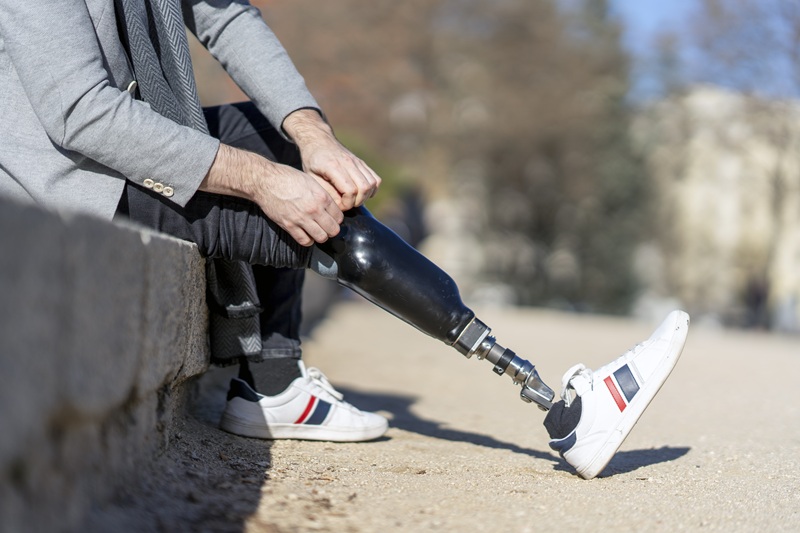
The weeks immediately following an amputation typically involve surgery, wound care, and a healing period before anyone can even discuss long-term outcomes. Return-to-work uncertainty sets in quickly. A worker who relied on both hands for their job may not know for months whether they can return to that same role, a different role with the same employer, or any version of the work they trained for. That uncertainty is disorienting on its own, separate from the financial pressure of missed paychecks during recovery.
Simple daily routines often require the most relearning. These adjustments can happen while the worker is also managing pain, phantom limb sensations, and the emotional effects of a permanent injury. Family members frequently absorb some of this adjustment too, taking on tasks the injured worker previously handled without a second thought.
Industries Where Workplace Amputation Injuries Can Occur
Amputation injuries can happen in many occupations, but the risk is particularly significant in jobs involving heavy machinery, powered tools, moving equipment, vehicles, and material handling. An amputation may happen at the time of the accident, or a severe crush injury at work may cause so much damage to a hand, finger, foot, or limb that surgical amputation later becomes necessary.

Some Charlotte-area workers who may encounter these hazards include:
- Construction workers working with saws, power tools, heavy equipment, or machinery
- Warehouse workers operating forklifts, conveyors, pallet equipment, and other material-handling machinery
- Truck drivers who can suffer severe limb injuries in crashes, loading accidents, or incidents involving trailers and equipment
- Government employees working in public works, utilities, maintenance, sanitation, or other equipment-intensive positions
- Restaurant workers using commercial slicers, grinders, and other powered kitchen equipment
The circumstances can look very different from one occupation to another, but workers’ compensation does not require an amputation to happen in a particular type of workplace. What matters is whether the injury arose out of and in the course of the worker’s employment.
Workers’ Compensation for Amputation: How North Carolina Values the Loss
North Carolina treats amputation as what the law calls a scheduled injury, under N.C. Gen. Stat. 97-31. Rather than evaluating how the loss affects a specific worker’s actual ability to earn a living, the statute assigns a fixed number of weeks of compensation to each body part, paid at two-thirds of the worker’s average weekly wage. When an amputation results in the total loss of a scheduled body part, the worker is generally entitled to the full number of weeks assigned to that loss. Partial amputations can be calculated differently depending on how much of the member was lost.

The NC Amputation Schedule by Body Part
The schedule assigns different weeks to different body parts, reflecting how much function each represents:
| Body Part | Scheduled Weeks of Compensation |
| Thumb | 75 weeks |
| Index finger | 45 weeks |
| Hand | 200 weeks |
| Arm | 240 weeks |
| Foot | 144 weeks |
| Leg | 200 weeks |
| Eye | 120 weeks |
A worker’s actual weekly benefit amount depends on their average weekly wage before the injury, multiplied by two-thirds, so two workers who both lose a hand can receive very different total settlements depending on what each was earning.
Can You Receive Additional Compensation for Disfigurement After an Amputation?
The statute specifies that scheduled compensation is paid in lieu of all other compensation, including disfigurement. In practice, that means the scheduled weeks are generally treated as the full and exclusive payment for the loss itself. A worker does not typically receive a separate additional payment specifically for the visible disfigurement or the trauma of the amputation on top of the scheduled award, since North Carolina folded that consideration into the schedule itself when the statute was written. Workers who assume disfigurement is compensated separately, the way it sometimes is in a personal injury claim, are often surprised to learn workers’ compensation does not work that way for scheduled injuries.

Where Prosthetics and Rehab Fit Into an Amputation Injury Claim
Prosthetic devices, fittings, adjustments, physical therapy, and other medically necessary care related to the amputation may be covered as medical compensation rather than being deducted from the worker’s scheduled disability benefits. This distinction matters because prosthetic technology and a worker’s functional needs both change over years, and medical coverage for a properly documented amputation claim is not meant to end once the scheduled payment period runs out.
Total and Permanent Disability: When a Claim Goes Beyond the Schedule
Some amputation injuries fall outside the standard schedule entirely. The loss of both hands, both arms, both feet, both legs, both eyes, or any combination of two of these is treated as total and permanent disability under a different section of the law, rather than being calculated through the standard weeks-per-body-part schedule. This distinction matters significantly, since total and permanent disability benefits are not capped the same way scheduled injury benefits are, reflecting the reality that losing use of two major body parts affects a person’s ability to work in a fundamentally different way than losing one.
Filing an Amputation Injury Claim: Deadlines and Reporting
Reporting requirements start almost immediately. An employer generally must report an injury to its workers’ compensation carrier and file a formal report with the Industrial Commission if medical bills exceed $4,000 or the worker misses more than one day of work, both thresholds an amputation claim will typically meet.
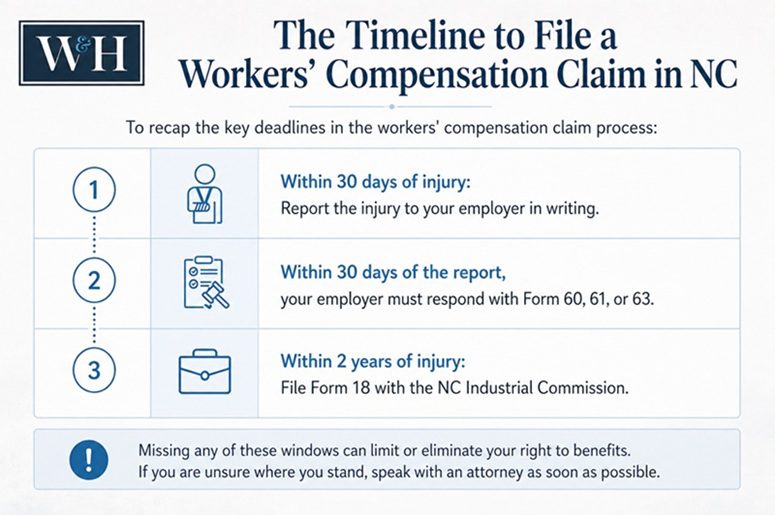
Workers should also generally provide written notice of the accident to their employer within 30 days and file a Form 18 with the Industrial Commission within two years. The employer’s Form 19 does not replace the employee’s responsibility to file their own claim.
Meeting these deadlines is only the beginning. An amputation claim can also involve questions about the worker’s average weekly wage, the scheduled award for the loss, related injuries, ongoing medical treatment, and prosthetic care.
Protecting Your Benefits After a Workplace Amputation
North Carolina’s schedule makes part of an amputation claim look straightforward: a specific loss is assigned a specific number of weeks of compensation. But the schedule does not answer every question that follows a life-changing injury. Whether you can return to your previous work, what medical and prosthetic care you will need, and how your average weekly wage is calculated can all affect what happens after the initial claim is filed.
For someone recovering from an amputation, the goal should be to make sure the claim accounts for more than the scheduled number assigned to a body part. Medical care, future needs, work limitations, and the benefits available under North Carolina law all deserve consideration before the claim is resolved.
If you suffered an amputation or loss of use because of a workplace accident, Waple & Houk can review your workers’ compensation claim, explain the benefits that may apply, and help you understand what comes next.
Questions About an Amputation Injury Claim?
Waple & Houk can review your injury and explain how North Carolina workers' compensation benefits may apply to your claim.
Get Help With Your CaseWorkers’ Compensation
And Family Lawyers
Providing
Strength In A
Time of Crisis
Call US now:
Our Success
Case Results
$80,000
Elbow Injury
$350,000
Arm Injury






Related Posts


24Aug 2026
reviews
What Real Clients Have To Say
Melissa S.

Lou and his team did an outstanding job on my case. They kept me updated constantly. There were times when I was so overwhelmed-the encouragement I received from the firm is the BEST I’ve received from any law firm in the past. I HIGHLY recommend Lou and his team.
Tim J.
Great attorney helped the most at a important time.
Aimee B.
Lou and his team worked quickly to ensure that my husband received the care and physical therapy he needed after a pretty serious work injury. They handled every phone call and question with the insurance adjuster, we didn’t have to fight with anyone to get anything that was expected or promised. They communicated with us every step of the way, and they were especially responsive and helpful when my husband’s case required more than anyone had anticipated. Every person we have spoken with in Lou’s office were patient and respectful, we never felt like we...
Lucas J.
Very good people to work with! I highly recommend this law firm.
Dustin M.
I have never had a more pleasant experience with an attorney and their paralegals in my life!!! Hands down the best law firm in North Carolina, probably the whole country! Would definitely recommend them to anyone needing counsel. They are all so easy to get along with and friendly.... My employer lied, as many do in this situation but Lou and his team were quick to step in and get me the compensation I deserved! Thank you, from my whole family. Waple and Houk are #1
Darrin R.
Mr. Lou is by far the most compassionate attorney I’ve encountered and once again he helped me with a worker’s compensation claim and his paralegal was also great. Mr.Lou is very professional and he allows you room for your concerns and opinions, he’s just a great human being that doesn’t need to advertise his partnership law firm on tv just ask any of his past clients and they would totally agree with me, God forbid that I’m in a serious car accident but if I am he’s just a phone call away so if you...
Travis B.
Mr. Waple did a fantastic job on my case, even if I wasn't a lot of help he still came through and for that I thank you Mr. Waple.
Tara D.
I was at a point of despair & thought that my then employer would do the right thing. Lou’s honesty, and integrity; along with his guidance gave me the dose of reality that I needed to see the true colors of legality in corporate America. Without his savvy I would have been blindsided! Cherie, always responded to all of my responses, and nervous reactions and made sure Lou was aware of what was happening! Great firm, I would highly recommend to anyone who wants respect, honesty and guidance as a client!
Aunyette S.
Mr.Waple has handled both of my cases very well. I definitely recommend this team of professional lawyers and secretaries. Thank you!
Tashaun H.
My experience working with Lou was an absolute joy. From our very first conversation, he assured me that he would work relentlessly to help me secure adequate compensation for my case and he did just that. His paralegal, Cheri, was helpful with timely responses to any and all questions I had and she helped reduce the stress of a very tedious process. I highly recommend this firm for any future litigation and would love to work with them again if the opportunity arises.