Serving All North Carolina
(704) 954-8697
Charlotte Warehouse Workers Compensation Lawyer
$325,000
Back Injury
$198,000
Back Injury
$170,000
Shoulder Injury
$130,000
Shoulder Injury
$125,000
Back Injury
$115,000
Back/Hip Injury
$100,000
Foot Injury
$90,000
Neck/Back Injury
$75,000
Hand Injury
$70,000
Foot Injury
Warehouse, distribution, and manufacturing jobs are the backbone of Charlotte’s economy. They are also among the most physically demanding and injury-prone occupations in North Carolina. A serious on-the-job accident in these industries can be life-altering.
At Waple & Houk, PLLC, our warehouse workers’ compensation attorneys represent injured workers across Charlotte’s warehouse and industrial sectors. As an experienced industrial lawyer team, we handle claims for warehouse employees, distribution center workers, manufacturing workers, forklift operators, and heavy machinery workers. We serve injured workers throughout Charlotte and Mecklenburg County.
Contact us for a free case review. We work on contingency. No fees unless we recover benefits for you.
Warehouse & Distribution Center Workers in Charlotte
Charlotte is a major logistics hub. Warehouse and distribution operations employ tens of thousands of workers across Mecklenburg County. Large fulfillment and distribution centers operate at high speed and high volume. That pace creates real risk for the workers who keep those operations running.
Charlotte warehouse and distribution employees have the right to workers’ compensation benefits when injured on the job. This applies to workers at all types of facilities. That includes major national employers like Amazon and Target, as well as smaller local operations throughout the city.
If you suffered a work injury at a Charlotte warehouse or distribution center, our attorneys can help you understand your rights and pursue the full benefits you are owed under North Carolina law.
Common causes of warehouse and distribution worker injuries in Charlotte include:
- Slip and fall accidents on wet or cluttered floors
- Struck-by accidents involving forklifts, pallet jacks, or moving vehicles
- Falling objects from improperly secured or overloaded shelving
- Overexertion from repetitive lifting, carrying, or scanning tasks
- Conveyor belt entanglement or pinch point injuries
- Loading dock accidents involving trucks or heavy freight
- Repetitive stress injuries including carpal tunnel syndrome
Warehouse injuries range from back strains and torn rotator cuffs to traumatic brain injuries and amputations. The severity of these injuries often means extended time away from work. It also means significant medical expenses. Our job is to pursue the full value of your workers’ compensation claim so you can focus on recovering.
Manufacturing & Factory Workers Compensation Attorney in Charlotte
Charlotte’s manufacturing sector is one of the largest in the Carolinas. Factory workers, plant employees, welders, HVAC technicians, meat packing workers, and others in industrial settings face serious hazards every day. If you suffered a manufacturing injury, a workers comp claim is something you may be entitled to file under North Carolina law. Waple & Houk, PLLC, is ready to help.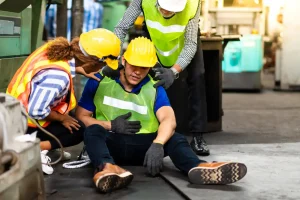
Manufacturing and factory work involves constant exposure to heavy machinery, high-temperature equipment, and toxic substances. Accidents in these settings can happen without warning. The resulting injuries are often severe.
Common manufacturing and factory injuries we handle include:
- Machine entanglement and crush injuries
- Plant accidents and explosions
- Chemical burns and toxic exposure
- Welding injuries, including eye damage and burns
- HVAC technician injuries from falls, electrical hazards, or equipment failures
- Meat packing and food processing injuries, including lacerations and repetitive stress
- Back and spinal injuries from heavy lifting or equipment operation
- Occupational illnesses from long-term chemical or dust exposure
Our Charlotte manufacturing workers compensation attorneys understand how factories operate and how injuries occur in those environments. Our team also understands how insurers evaluate and dispute manufacturing claims. We use that knowledge to build stronger cases for our clients.
If your claim has been disputed or denied after a manufacturing or factory accident, our attorneys can help you pursue your rights through the North Carolina Industrial Commission.
Charlotte Forklift Accident Lawyer
Forklift accidents are one of the leading causes of serious workplace injuries and fatalities in North Carolina. They occur in warehouses, distribution centers, manufacturing plants, and construction sites across Charlotte every year. A forklift accident can result in catastrophic injuries in a matter of seconds. Crush injuries, traumatic brain injuries, spinal cord damage, and amputations are all common outcomes.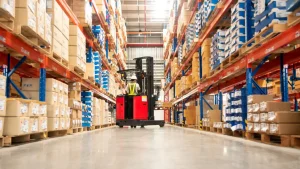
Our Charlotte forklift accident lawyer team represents workers injured in all types of forklift incidents, including:
- Struck-by accidents, where a worker on foot is hit by a moving forklift
- Tip-over accidents, where the forklift rolls onto the operator
- Caught-between accidents, where a worker is pinned between the forklift and a structure
- Falling load accidents, where improperly secured freight falls from the forks
- Forklift or vehicle-related accidents within the plant involving pedestrian workers
- Amazon warehouse forklift accidents and incidents at other high-volume fulfillment centers
Forklift accidents are frequently caused by inadequate training, poor maintenance, or unsafe facility conditions. An experienced forklift work injury lawyer can document the full circumstances of the accident. This is essential for building the strongest possible workers’ compensation claim.
Whether you were operating the forklift or injured as a pedestrian worker, you have rights under North Carolina law. OSHA maintains strict forklift safety standards. Violations of those standards can be directly relevant to your claim. Our forklift injury attorneys are familiar with OSHA requirements as they apply in Charlotte’s industrial workplaces.
Heavy Machinery Accident Lawyer in Charlotte
Heavy equipment operator injuries and caught-in-between accidents are among the most dangerous incidents in Charlotte’s industrial workplaces. Workers injured by heavy machinery often suffer catastrophic and permanent injuries. The same is true for workers who are pinned or crushed between equipment and fixed structures.
If you were injured as a heavy equipment operator, or involved in a caught-in-between accident, our team handles these cases with the depth of preparation they require. Heavy machinery accident claims are often complex. Insurers may dispute the circumstances of the accident or contest the extent of the injuries. Our heavy machinery accident attorneys know how to counter those arguments effectively.
Common heavy machinery and caught-in-between injuries we handle include: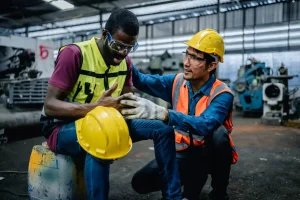
- Injuries from conveyor belt entanglement or pinch points
- Workers pinned between machinery, walls, or other structures
- Injuries from industrial presses, stamping machines, or hydraulic equipment
- Crane and overhead equipment accidents
- Workers struck by or caught under moving machinery components
- Plant accidents involving explosions or equipment failures
- Charlotte workplace accidents involving heavy construction or industrial equipment
These injuries frequently result in amputations, fractures, and permanent disability. The medical care required is often extensive and long-term. Our attorneys fight to ensure injured workers receive the full scope of benefits they are entitled to under North Carolina law. This includes coverage for ongoing medical treatment and appropriate disability benefits.
Workers’ Compensation Benefits for Injured Industrial Workers in Charlotte
Whether you work in a warehouse, factory, distribution center, or industrial plant, North Carolina workers’ compensation law provides the same foundational protections. The system operates on a no-fault basis. You do not need to prove your employer was negligent. You simply need to show that the injury occurred during the course of your employment.
Workers’ compensation benefits available to injured Charlotte workers include:
- Medical treatment — all reasonable and necessary medical care related to the work injury, including surgery, physical therapy, prescriptions, and specialist visits
- Temporary total disability benefits — wage replacement while you are completely unable to work
- Temporary partial disability benefits — supplemental income if you return to work at reduced capacity
- Permanent impairment benefits — compensation for lasting physical limitations caused by the work accident
- Vocational rehabilitation — assistance returning to suitable employment if your injuries prevent you from returning to your previous job
Disability benefits are calculated based on your average weekly wage at the time of the injury. This figure matters significantly for hourly workers in warehouse, manufacturing, and distribution roles. Insurers sometimes understate the average weekly wage. This reduces the benefits you receive over time. Our attorneys review these calculations carefully for every client.
What to Do After a Warehouse or Manufacturing Injury in Charlotte
The steps you take after an on-the-job accident affect the strength of your workers’ compensation claim. If you are injured at a warehouse, factory, or distribution center in Charlotte, take these steps:
- Seek medical attention immediately. Your health comes first. Prompt medical care also creates documentation of the injury.
- Report the accident to your employer in writing. North Carolina law requires you to report your injury within 30 days. Do not rely on a verbal report alone.
- Document everything you can. Note the time, location, and circumstances of the accident. Take photographs if possible. Identify any witnesses.
- Follow your treating physician’s instructions. Failing to comply with medical recommendations can be used against you in the claims process.
- Contact an industrial workers’ compensation attorney before speaking with the insurer. Insurance adjusters work for the employer’s carrier, not for you. An attorney can protect your rights if a dispute arises.
North Carolina imposes a two-year statute of limitations on filing a workers’ compensation claim. Acting promptly protects your options.
Why Charlotte’s Industrial Workers Choose Waple & Houk
Charlotte’s warehouse, distribution, and manufacturing industries employ workers who take on real physical risk every day. When an accident happens, those workers deserve representation that understands their industry and knows how insurance carriers evaluate and minimize claims.
Our team has represented workers’ compensation clients on both sides of these cases. We know how insurers build their arguments. We know where they look for weaknesses, and we know how to counter those strategies on behalf of injured workers.
Our firm provides direct access to your Charlotte workers’ compensation attorney throughout your case. You speak with your attorney at every stage. We handle all communication with the insurance carrier on your behalf. Our job is to fight for the benefits you are owed while you focus on getting better.
Frequently Asked Questions for Warehouse & Manufacturing Workers
Do I qualify for workers’ compensation if I was injured at a warehouse or factory in Charlotte?
In most cases, yes. North Carolina requires employers with three or more employees to carry workers’ compensation insurance. If you were injured while performing job duties at a Charlotte warehouse, distribution center, factory, or manufacturing facility, you likely qualify for benefits. The system is no-fault. You do not need to prove your employer caused the accident.
What should I do if my workers’ compensation claim is denied after a manufacturing or warehouse injury?
Do not accept the denial as final. Claims in Charlotte’s industrial sector are denied for many reasons. Common reasons include disputes about whether the injury occurred during employment, allegations of a pre-existing condition, and misclassification of the worker as an independent contractor. You have the right to appeal through the North Carolina Industrial Commission. Contact a workers’ compensation attorney promptly, as strict deadlines apply.
Can I file a workers’ compensation claim for a forklift accident in Charlotte?
Yes. Forklift accidents are fully covered under North Carolina’s workers’ compensation system. Whether you were operating the forklift or injured as a pedestrian worker nearby, you have the right to file a claim. Benefits can include medical treatment, wage replacement, and disability payments. A Charlotte forklift accident lawyer can help document the full circumstances of the accident and build the strongest possible case.
What if I was injured by heavy machinery or caught between equipment at a Charlotte factory?
“Caught-in-between” and heavy machinery accidents are covered under North Carolina workers’ compensation law. These cases are often complex. Insurers may dispute the severity of the injuries or challenge whether proper safety protocols were followed. An attorney experienced in heavy machinery accident claims can gather the evidence needed to support your case. This includes witness statements, OSHA records, and detailed medical documentation.
Contact Our Charlotte Warehouse & Manufacturing Workers’ Compensation Attorneys
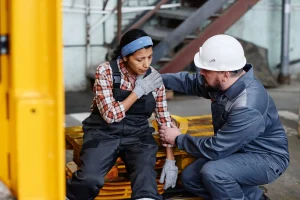
If you were injured at a warehouse, distribution center, factory, or manufacturing plant in Charlotte, Waple & Houk, PLLC, is ready to help. Our attorneys serve injured workers throughout Charlotte and Mecklenburg County. We handle claims involving all types of industrial workplace injuries.
Time matters. North Carolina’s reporting and filing deadlines run from the date of your injury. The sooner you contact our office, the more options we have to protect your claim.
Contact us online for a free consultation and no-obligation case review. We charge no fees unless we recover benefits for you.
reviews
What Real Clients Have To Say
Melissa S.

Lou and his team did an outstanding job on my case. They kept me updated constantly. There were times when I was so overwhelmed-the encouragement I received from the firm is the BEST I’ve received from any law firm in the past. I HIGHLY recommend Lou and his team.
Tim J.
Great attorney helped the most at a important time.
Aimee B.
Lou and his team worked quickly to ensure that my husband received the care and physical therapy he needed after a pretty serious work injury. They handled every phone call and question with the insurance adjuster, we didn’t have to fight with anyone to get anything that was expected or promised. They communicated with us every step of the way, and they were especially responsive and helpful when my husband’s case required more than anyone had anticipated. Every person we have spoken with in Lou’s office were patient and respectful, we never felt like we...
Lucas J.
Very good people to work with! I highly recommend this law firm.
Dustin M.
I have never had a more pleasant experience with an attorney and their paralegals in my life!!! Hands down the best law firm in North Carolina, probably the whole country! Would definitely recommend them to anyone needing counsel. They are all so easy to get along with and friendly.... My employer lied, as many do in this situation but Lou and his team were quick to step in and get me the compensation I deserved! Thank you, from my whole family. Waple and Houk are #1
Darrin R.
Mr. Lou is by far the most compassionate attorney I’ve encountered and once again he helped me with a worker’s compensation claim and his paralegal was also great. Mr.Lou is very professional and he allows you room for your concerns and opinions, he’s just a great human being that doesn’t need to advertise his partnership law firm on tv just ask any of his past clients and they would totally agree with me, God forbid that I’m in a serious car accident but if I am he’s just a phone call away so if you...
Travis B.
Mr. Waple did a fantastic job on my case, even if I wasn't a lot of help he still came through and for that I thank you Mr. Waple.
Tara D.
I was at a point of despair & thought that my then employer would do the right thing. Lou’s honesty, and integrity; along with his guidance gave me the dose of reality that I needed to see the true colors of legality in corporate America. Without his savvy I would have been blindsided! Cherie, always responded to all of my responses, and nervous reactions and made sure Lou was aware of what was happening! Great firm, I would highly recommend to anyone who wants respect, honesty and guidance as a client!
Aunyette S.
Mr.Waple has handled both of my cases very well. I definitely recommend this team of professional lawyers and secretaries. Thank you!
Tashaun H.
My experience working with Lou was an absolute joy. From our very first conversation, he assured me that he would work relentlessly to help me secure adequate compensation for my case and he did just that. His paralegal, Cheri, was helpful with timely responses to any and all questions I had and she helped reduce the stress of a very tedious process. I highly recommend this firm for any future litigation and would love to work with them again if the opportunity arises.

Request a Consultation
We Are Here For You

Copyright 2026 All Rights Reserved | Accessibility Notice | Privacy Policy
Attorney Advertising. This information is designed for general information only. The information presented should not be construed to be formal legal advice nor the formation of a lawyer/client relationship. Past results and testimonials are not a guarantee, warranty, or prediction of the outcome of your case, and should not be construed as such. Past results cannot guarantee future performance. Any result in a single case is not meant to create an expectation of similar results in future matters because each case involves many different factors, therefore, results will differ on a case-by-case basis. By providing contact information, users acknowledge and give explicit consent to be contacted via the methods of communication provided, including SMS. Message and data rates may apply. Message frequency may vary. Reply STOP to opt out.