Serving All North Carolina
(704) 954-8697
Why Do I Have to Take a Drug Test After My Workplace Accident?
Connect With Us
21Jun

A positive drug test after a workplace accident does not automatically end a workers’ compensation claim, even though it often feels that way to the worker being tested. Post-accident drug testing is a common practice, required by many employer policies and frequently requested or required by workers’ compensation insurers, but the legal effect of a positive result is more limited than most workers assume. Understanding why the accident at work drug test happens, what it actually proves, and how North Carolina law treats the results helps workers respond to the situation accurately rather than assuming the worst.
Why Employers Require Drug Testing After an Accident
Many employers maintain post-accident drug testing policies as a standard part of their workplace safety program. These policies typically apply regardless of fault, meaning the worker is tested whether the accident was clearly someone else’s doing, a mechanical failure, or unclear in cause. The policy exists in part because employers have liability and insurance incentives to document that they maintain a drug-free workplace, and in part because intoxication can be a relevant factor in understanding how an accident occurred.
Workers’ compensation insurance carriers also have an interest in post-accident drug testing. If a worker was impaired at the time of an accident, North Carolina law allows the intoxication to affect the compensability of the claim under certain circumstances. The insurer’s interest in testing is directly connected to whether intoxication can be used as a defense to reduce or deny benefits.
The Occupational Safety and Health Administration has clarified that post-accident drug testing policies must be reasonably related to the accident and not designed to discourage workers from reporting injuries. A policy that automatically tests every worker after any injury, regardless of how minor or clearly unrelated to impairment, has drawn scrutiny under this standard in some contexts.
When Is a Drug Test Required After an Accident
When a drug test is required after an accident depends on the employer’s specific policy and the nature of the workplace. Employers in industries with heightened safety concerns, including construction, transportation, and manufacturing, frequently have more stringent testing policies than office-based employers. Federal regulations require drug testing in certain safety-sensitive transportation positions following specific types of accidents, separate from any state workers’ compensation considerations.
Common Triggers for Post-Accident Testing

- Any accident resulting in a reportable injury requiring medical treatment beyond first aid
- Accidents involving equipment, machinery, or vehicles
- Accidents where the cause is unclear or where impairment is a reasonable consideration
- Accidents in industries subject to federal safety-sensitive position requirements
- Accidents resulting in significant property damage in addition to injury
Some employer policies require testing for every workplace injury regardless of severity, which can feel disproportionate for a minor incident. That blanket approach is generally permissible as a workplace policy, though it does not change how the test result is legally used in a workers’ compensation claim.
Does a Positive Test Automatically Defeat Your Claim?
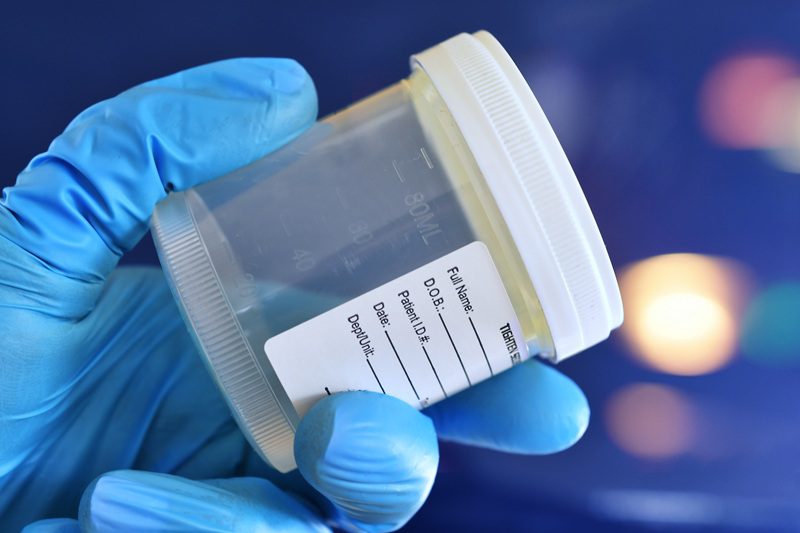
No, and this is the point most workers misunderstand. North Carolina workers’ compensation law creates a rebuttable presumption, not an automatic bar, when a worker tests positive for drugs or alcohol following a workplace accident. Under North Carolina General Statute 97-12, if a worker’s injury was proximately caused by intoxication, the worker is not entitled to compensation. A positive drug test alone does not establish that the intoxication caused the accident.
The insider knowledge point that matters here: causation, not mere presence of a substance, is the legal standard. A worker who tests positive for marijuana metabolites, which can remain detectable in the body for weeks after use and well after any impairment has worn off, has not necessarily been shown to have been impaired at the time of the accident, let alone that any impairment caused the injury. Insurers sometimes treat a positive test as conclusive when the law requires a connection between the substance and the cause of the accident.
What the Insurer Must Show to Use Intoxication as a Defense
- That the worker was impaired at the time of the accident, not simply that a substance was present in their system
- That the impairment was a proximate cause of the accident, meaning the accident would not have happened, or would have happened differently, but for the impairment
- That the causal connection is supported by evidence beyond the test result alone, which may include witness accounts, the nature of the accident, and expert testimony about the substance’s effects
A worker who can show that the accident was caused by something unrelated to impairment, such as a mechanical failure, another person’s negligence, or an unsafe condition that would have caused the accident regardless of the worker’s state, has grounds to rebut the intoxication presumption even with a positive test result.
How North Carolina Handles Drug Testing After Workplace Injury
Drug testing after workplace injury in North Carolina operates within a legal framework that balances employer and insurer interests against worker protections. The presumption under N.C.G.S. 97-12 shifts the burden, once a positive test and reasonable evidence of impairment are established, to the worker to show that intoxication was not the proximate cause of the injury. This is a significant legal hurdle, but it is not an automatic disqualification.
Workers facing this situation should be aware of several practical realities. The timing of the test matters; a test administered hours or days after an accident is generally less probative of impairment at the time of the accident than one administered immediately. The substance involved matters; alcohol and prescription medications taken as directed are treated differently than illegal drug use, and prescribed medication use disclosed to the employer in advance may carry additional protections. The specific facts of how the accident occurred matter more than the test result in isolation.
According to data compiled by the National Safety Council, workplace drug testing has expanded significantly over the past two decades, even as several states have legalized marijuana for medical or recreational use, creating ongoing tension between testing policies and the practical reality of substance metabolism and detection windows.
What to Do If You Test Positive After a Workplace Accident
If you have tested positive following a workplace accident in or around Charlotte, the steps you take afterward affect your ability to challenge an intoxication defense if the insurer raises one.
- Be honest with your medical providers and your attorney about what substances were in your system and when you used them. Strategic honesty with your own representation allows them to build the strongest possible response.
- Document the cause of the accident as thoroughly as possible. Witness statements, photographs of the accident scene, and any evidence of equipment failure or unsafe conditions are valuable regardless of the test result.
- Disclose any prescribed medications to your employer and treating physicians, ideally before any accident occurs, but certainly afterward if you have not already.
- Do not assume the claim is over. A positive test is a factor the insurer may raise, not a guaranteed claim denial.
- Get legal guidance promptly. The proximate cause analysis is fact-specific, and building the evidence to rebut a presumption is more effective when it starts early.
Workers who assume a positive test ends their case sometimes abandon claims they would otherwise have a reasonable basis to pursue. The legal standard exists precisely because a test result alone does not tell the whole story of how an accident happened.
A Test Result Is a Starting Point, Not a Verdict

Drug testing after a workplace accident exists for legitimate safety and insurance reasons, and it is a routine part of many workplace injury investigations. What it is not is a self-executing determination of whether a workers’ compensation claim succeeds. North Carolina law requires a connection between impairment and causation that a positive test, by itself, does not establish.
Workers who find themselves in this situation are often dealing with genuine confusion about what comes next, compounded by the stress of an injury and uncertainty about their job. Understanding that the legal analysis is more nuanced than “positive test equals no benefits” is the first step toward responding to the situation effectively rather than giving up on a claim prematurely.
For workers in the Charlotte area navigating a workers’ compensation claim where intoxication has become an issue, getting an accurate read on the specific facts of the case and how North Carolina’s legal standard applies is the most useful thing to do early. Speaking with a workers’ compensation attorney who understands how these defenses are raised and rebutted gives a worker a realistic picture of their options before any decisions are made about how to proceed.
Workers’ Compensation
And Family Lawyers
Providing
Strength In A
Time of Crisis
Call US now:
Our Success
Case Results
$80,000
Elbow Injury
$350,000
Arm Injury




Related Posts


reviews
What Real Clients Have To Say
Melissa S.

Lou and his team did an outstanding job on my case. They kept me updated constantly. There were times when I was so overwhelmed-the encouragement I received from the firm is the BEST I’ve received from any law firm in the past. I HIGHLY recommend Lou and his team.
Tim J.
Great attorney helped the most at a important time.
Aimee B.
Lou and his team worked quickly to ensure that my husband received the care and physical therapy he needed after a pretty serious work injury. They handled every phone call and question with the insurance adjuster, we didn’t have to fight with anyone to get anything that was expected or promised. They communicated with us every step of the way, and they were especially responsive and helpful when my husband’s case required more than anyone had anticipated. Every person we have spoken with in Lou’s office were patient and respectful, we never felt like we...
Lucas J.
Very good people to work with! I highly recommend this law firm.
Dustin M.
I have never had a more pleasant experience with an attorney and their paralegals in my life!!! Hands down the best law firm in North Carolina, probably the whole country! Would definitely recommend them to anyone needing counsel. They are all so easy to get along with and friendly.... My employer lied, as many do in this situation but Lou and his team were quick to step in and get me the compensation I deserved! Thank you, from my whole family. Waple and Houk are #1
Darrin R.
Mr. Lou is by far the most compassionate attorney I’ve encountered and once again he helped me with a worker’s compensation claim and his paralegal was also great. Mr.Lou is very professional and he allows you room for your concerns and opinions, he’s just a great human being that doesn’t need to advertise his partnership law firm on tv just ask any of his past clients and they would totally agree with me, God forbid that I’m in a serious car accident but if I am he’s just a phone call away so if you...
Travis B.
Mr. Waple did a fantastic job on my case, even if I wasn't a lot of help he still came through and for that I thank you Mr. Waple.
Tara D.
I was at a point of despair & thought that my then employer would do the right thing. Lou’s honesty, and integrity; along with his guidance gave me the dose of reality that I needed to see the true colors of legality in corporate America. Without his savvy I would have been blindsided! Cherie, always responded to all of my responses, and nervous reactions and made sure Lou was aware of what was happening! Great firm, I would highly recommend to anyone who wants respect, honesty and guidance as a client!
Aunyette S.
Mr.Waple has handled both of my cases very well. I definitely recommend this team of professional lawyers and secretaries. Thank you!
Tashaun H.
My experience working with Lou was an absolute joy. From our very first conversation, he assured me that he would work relentlessly to help me secure adequate compensation for my case and he did just that. His paralegal, Cheri, was helpful with timely responses to any and all questions I had and she helped reduce the stress of a very tedious process. I highly recommend this firm for any future litigation and would love to work with them again if the opportunity arises.