Serving All North Carolina
(704) 954-8697
Most Common Warehouse and Distribution Center Accidents and Injuries in North Carolina
Connect With Us
07Nov
Warehouse and distribution centers are essential to North Carolina’s economy. From regional logistics hubs to large fulfillment operations, warehouse workers keep goods moving across the state and nationwide. Reach out to a Charlotte workers’ compensation lawyer today!
However, warehouse work is statistically more dangerous than many other private industries due to the high-speed nature of modern logistics, heavy equipment use, and physically demanding job duties.
Recent warehouse injury statistics show that the warehousing sector has historically seen injury rates as high as 5.5 cases per 100 employees, significantly higher than many other industries. In fact, about one in 20 warehouse workers will experience an injury in a given year.
Understanding common warehouse injuries, how warehouse accidents happen, and what protections exist under North Carolina law is critical for worker safety.
Warehouse Injury Data in North Carolina and Nationwide
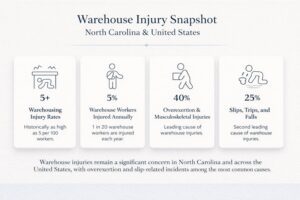
In 2024, North Carolina reported a private industry injury rate of 1.9 cases per 100 full-time workers, slightly lower than the national average of 2.3. However, the warehousing industry continues to report elevated injury and fatality rates compared to many other sectors.
Key data points include:
- The number of injuries and illnesses in transportation and warehousing increased nationwide from 206,900 to 253,100 in one year.
- North Carolina reported 35,700 severe injury cases involving days away from work, job transfer, or restriction (DART).
- Falls, slips, and trips resulted in approximately 450,540 injuries and 865 fatalities nationwide in 2022.
- In 2023, falls, slips, and trips accounted for 21% of workplace fatalities in North Carolina — higher than the national average of 17%.
- Fatalities in factories and warehouses in North Carolina rose nearly 50% between 2023 and 2025.
- The fatal injury rate for the warehousing industry remains higher than the national average for all industries.
Transportation incidents account for 35–37% of fatal work injuries in North Carolina, making them the leading cause of workplace deaths in the state.
Although some national rankings have placed North Carolina among the safer states for workers, industry-specific data shows that the warehousing sector continues to experience elevated injury rates compared to many other private industries.
Why Warehouse Work Carries Elevated Risk
Warehouse workers operate in fast paced environments with:
- Forklifts and other heavy equipment
- Stacked pallet racks and racking systems
- Loading docks and trailer bays
- Conveyor belts and automated systems
- Hazardous materials and hazardous chemicals
- Tight aisles and congested workspaces
The combination of heavy loads, moving equipment, environmental factors, and production pressure creates many potential hazards.
Specific fulfillment centers in Charlotte have reported serious injury rates more than double the industry average, particularly in high-speed robotic environments.
Mental stress, longer hours, fatigue, and workplace stress can further increase the risk of accidents and injuries.
Most Common Warehouse Injuries
Slips, Trips, and Falls
Slips, trips, and falls represent roughly 25% of all workers’ compensation claims in the warehouse industry. In large distribution centers, where workers are constantly moving between loading docks, pallet racks, and conveyor systems, even small environmental hazards can create significant risk.
Common causes include:
- Slippery floors
- Uneven surfaces
- Cluttered walkways
- Poor housekeeping
- Fall hazards near loading docks
These incidents can result in serious injuries, including fractures, concussions, severe head trauma, and back injuries. Falls from elevated loading docks or platforms can increase the severity of harm, particularly when heavy equipment or materials are involved.
Environmental factors such as poor housekeeping, congested workspaces, inadequate lighting, and fast-paced production demands significantly increase the likelihood of warehouse accidents. In facilities where inventory turnover is high and aisles are frequently crowded, even momentary distractions can contribute to workplace injuries.
Overexertion and Musculoskeletal Injuries
Overexertion and musculoskeletal disorders account for approximately 40% of all nonfatal warehouse injuries. Unlike sudden accidents, these injuries often develop gradually due to repetitive strain and physical stress placed on the body over time.
Warehouse workers are often exposed to ergonomic risk factors such as:
- Lifting and lowering heavy items
- Repetitive bending and reaching
- Handling heavy objects
- Performing repetitive motion tasks
These physical demands can lead to muscle strain, shoulder injuries, back and neck injuries, and long-term musculoskeletal injuries. Repetitive motion injuries such as carpal tunnel syndrome may develop after weeks or months of performing the same scanning, packing, or sorting motions.
In fast paced environments where productivity targets are emphasized, workers may work longer hours or skip proper lifting techniques, increasing the risk of injury. Ergonomic improvements, proper training, and thoughtful workplace design can significantly reduce musculoskeletal disorders and improve overall worker safety.
Forklift Accidents
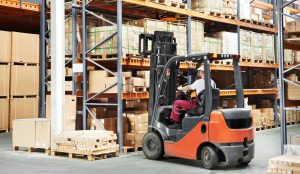
Forklift accidents are one of the leading causes of warehouse injury nationwide. Forklifts are essential pieces of equipment in distribution centers, but they also introduce substantial risk when operating in tight aisles or high-traffic areas.
Each year in the United States:
- Approximately 90,000 to 100,000 forklift accidents occur
- Around 95,000 injuries are reported
- Roughly 100 fatalities are linked to forklift incidents
Common forklift accidents involve:
- Tip-overs
- Collisions with pedestrians
- Falling loads
- Struck-by incidents
Because forklifts operate near stacked pallet racks, loading docks, and conveyor belts, visibility limitations and space constraints can contribute to accidents. In some cases, inadequate training, improper equipment maintenance, or failure to follow safety protocols increases the likelihood of serious injuries.
In North Carolina, fatalities from being struck by forklifts and falling equipment increased significantly between 2023 and 2025, highlighting the continued safety challenges within the warehouse industry.
Falling Objects and Struck-By Incidents
Warehouse workers are at risk of being hit by falling objects stored in pallet racks or racking systems. Distribution centers frequently store inventory at height to maximize space, which creates inherent fall hazards when materials are not properly secured.
Improper stacking, damaged shelving, unstable heavy loads, or impact from moving equipment can cause items to fall, leading to:
- Concussions
- Fractures
- Severe head injuries
- Crush injuries
Struck-by incidents are particularly dangerous because they can occur suddenly and without warning. In high-volume facilities where equipment and workers operate simultaneously, the risk of serious injuries increases when safety protocols are not consistently followed.
Chemical and Environmental Hazards
Distribution centers often store hazardous materials that present additional safety concerns. Damaged shipments or improper storage can lead to exposure to hazardous chemicals, toxic fumes, or flammable substances.
Chemical exposures can cause:
- Chemical burns
- Fire
- Convulsions
- Respiratory issues
- Long-term health problems such as organ damage or cancer
Unexpected releases of toxic, reactive, or flammable liquids and gases have been documented in storage facilities handling highly hazardous chemicals. Heat illness may also affect warehouse workers performing physical labor in high ambient temperatures, particularly in facilities that are not climate controlled.
Additionally, lockout/tagout programs are essential to ensure that electrical equipment and machinery are isolated from energy sources during equipment maintenance. Without proper safeguards, workers may suffer catastrophic injuries involving machinery or electrical systems.
Strong occupational safety measures, engineering controls, and consistent safety protocols are critical in reducing workplace injuries in warehouse and distribution center settings.
Preventing Warehouse Accidents

Employers are responsible for creating a work environment that prioritizes worker safety and minimizes risk.
Effective safety and health programs should include:
- Proper training on equipment and lifting techniques
- Clear safety protocols
- Equipment maintenance programs
- Engineering controls to reduce hazards
- Open communication regarding potential hazards
- Policies addressing fatigue and stress management
- Proper housekeeping and clear pathways
The Occupational Safety and Health (OSH) Division of North Carolina is actively targeting warehousing and storage to reduce injury rates by 5% by 2028.
Preventing injuries requires more than compliance. It requires a proactive approach to occupational safety.
Workers’ Compensation and Warehouse Injuries
When a warehouse injury occurs in North Carolina, workers’ compensation laws are intended to provide coverage for medical expenses and a portion of lost wages during recovery. These protections exist to help stabilize injured workers after a workplace injury and ensure access to necessary medical treatment.
Because warehouse environments involve both sudden accidents and repetitive strain injuries, the circumstances surrounding an injury can sometimes affect how a claim is evaluated. Clear documentation and an understanding of how workers’ compensation coverage applies are often important in these situations.
For individuals seeking more information about how North Carolina workers’ compensation laws apply to warehouse injuries, the team at Waple & Houk, PLLC, provides guidance and case evaluations for injured workers across the state.
Frequently Asked Questions
How common are warehouse injuries?
Warehouse injury statistics show that approximately one in 20 warehouse workers experiences an injury each year. The industry’s injury and fatality rates remain higher than many other private sectors.
What are the most common warehouse injuries?
Common warehouse injuries include overexertion injuries, musculoskeletal injuries, slips, trips, and falls, forklift accidents, and being struck by falling objects.
Are warehouse workers covered by workers’ compensation?
Yes. In North Carolina, warehouse workers who suffer a workplace injury may qualify for workers’ compensation benefits covering medical treatment and lost wages.
Workers’ Compensation
And Family Lawyers
Providing
Strength In A
Time of Crisis
Call US now:
Our Success
Case Results
$80,000
Elbow Injury
$350,000
Arm Injury






Related Posts


reviews
What Real Clients Have To Say
Melissa S.

Lou and his team did an outstanding job on my case. They kept me updated constantly. There were times when I was so overwhelmed-the encouragement I received from the firm is the BEST I’ve received from any law firm in the past. I HIGHLY recommend Lou and his team.
Tim J.
Great attorney helped the most at a important time.
Aimee B.
Lou and his team worked quickly to ensure that my husband received the care and physical therapy he needed after a pretty serious work injury. They handled every phone call and question with the insurance adjuster, we didn’t have to fight with anyone to get anything that was expected or promised. They communicated with us every step of the way, and they were especially responsive and helpful when my husband’s case required more than anyone had anticipated. Every person we have spoken with in Lou’s office were patient and respectful, we never felt like we...
Lucas J.
Very good people to work with! I highly recommend this law firm.
Dustin M.
I have never had a more pleasant experience with an attorney and their paralegals in my life!!! Hands down the best law firm in North Carolina, probably the whole country! Would definitely recommend them to anyone needing counsel. They are all so easy to get along with and friendly.... My employer lied, as many do in this situation but Lou and his team were quick to step in and get me the compensation I deserved! Thank you, from my whole family. Waple and Houk are #1
Darrin R.
Mr. Lou is by far the most compassionate attorney I’ve encountered and once again he helped me with a worker’s compensation claim and his paralegal was also great. Mr.Lou is very professional and he allows you room for your concerns and opinions, he’s just a great human being that doesn’t need to advertise his partnership law firm on tv just ask any of his past clients and they would totally agree with me, God forbid that I’m in a serious car accident but if I am he’s just a phone call away so if you...
Travis B.
Mr. Waple did a fantastic job on my case, even if I wasn't a lot of help he still came through and for that I thank you Mr. Waple.
Tara D.
I was at a point of despair & thought that my then employer would do the right thing. Lou’s honesty, and integrity; along with his guidance gave me the dose of reality that I needed to see the true colors of legality in corporate America. Without his savvy I would have been blindsided! Cherie, always responded to all of my responses, and nervous reactions and made sure Lou was aware of what was happening! Great firm, I would highly recommend to anyone who wants respect, honesty and guidance as a client!
Aunyette S.
Mr.Waple has handled both of my cases very well. I definitely recommend this team of professional lawyers and secretaries. Thank you!
Tashaun H.
My experience working with Lou was an absolute joy. From our very first conversation, he assured me that he would work relentlessly to help me secure adequate compensation for my case and he did just that. His paralegal, Cheri, was helpful with timely responses to any and all questions I had and she helped reduce the stress of a very tedious process. I highly recommend this firm for any future litigation and would love to work with them again if the opportunity arises.