Serving All North Carolina
(704) 954-8697
What to Know About Workers’ Comp for Knee Injuries in Charlotte
Connect With Us
21Jul
A knee injury at work rarely announces itself the same way twice. One worker plants a foot wrong on a wet loading dock and hears a pop. Another spends fifteen years kneeling on job sites and slowly loses the ability to climb stairs without pain. Both situations can result in a work-related knee injury, but North Carolina’s workers’ compensation system evaluates them differently.
Workers’ comp for knee injuries depends heavily on which of those two categories a claim falls into. Understanding that distinction early shapes everything from what evidence to gather to how long the claim is likely to take. A Charlotte workers’ compensation lawyer can help determine whether your knee injury qualifies for benefits and what evidence will be needed to support your claim.
Sudden vs. Gradual Knee Injuries at Work

A sudden knee injury- a fall, a twist while carrying a load, a direct blow fits cleanly into North Carolina’s standard framework for a compensable accident. There is a date, a mechanism, and usually a clear moment when the injury happened.
Gradual knee injuries are harder. Years of kneeling, squatting, or climbing wear down cartilage over time, and there is rarely one specific date to point to. North Carolina still recognizes these claims in certain situations, particularly where work activity accelerated an existing condition. If years of physical work caused someone to need a knee replacement sooner than they otherwise would have, that acceleration itself can be compensable, even without a single accident to point to. The challenge is usually not whether the law allows coverage, but whether the medical evidence clearly connects years of work duties to the condition that eventually developed.
Workers’ Compensation Benefits for Knee Injuries
North Carolina requires the insurer to cover reasonable and necessary treatment connected to the injury. For a knee, that often means more than a single course of physical therapy.
- Diagnostic imaging, including X-rays and MRIs to identify ligament, meniscus, or cartilage damage
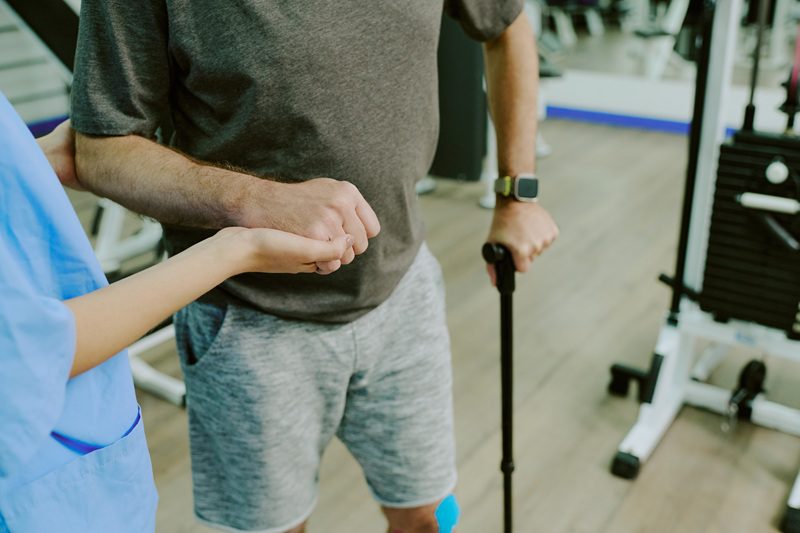
- Physical therapy, both before and after any surgical procedure
- Surgical treatment, ranging from arthroscopic meniscus repair to full ACL reconstruction to knee replacement in severe cases
- Wage replacement at two-thirds of average weekly wage during recovery periods that keep a worker off the job entirely
Workers’ comp benefits for knee injuries often extend over many months, since knee surgeries typically involve a lengthy rehabilitation period before a worker reaches maximum medical improvement.
Why NC Rates Knees as Leg Impairments
Here is a detail that catches a lot of injured workers off guard: North Carolina’s workers’ compensation schedule does not list the knee as its own body part. Permanent impairment to the knee gets rated under the leg, which is scheduled for up to 200 weeks of compensation for total loss of use.
In practice, that means a doctor assigns an impairment rating, such as 20 percent loss of use of the leg. That percentage gets applied to the 200-week schedule to calculate benefits. A worker who does not know this connection exists might not realize why their knee settlement discussion keeps referencing their leg rather than their knee specifically. It is not an error. It is how the statute is structured, and it can meaningfully affect how a settlement gets calculated compared to an injury rated under a different schedule entirely.
Workers Compensation for a Torn ACL at Work
ACL injuries typically happen through a twisting or pivoting motion, often while carrying weight or changing direction quickly. They are common in physically active jobs and in roles that involve climbing, lifting, or navigating uneven surfaces.
Workers’ compensation for torn ACL at work claims usually follows a predictable timeline. Surgery typically happens within weeks of diagnosis. Six to twelve months of rehabilitation follow before a doctor considers the knee to have reached maximum medical improvement. Settlement discussions typically do not begin until the worker reaches maximum medical improvement and a permanent impairment rating can be assigned.
Industries Where Knee Injuries Are Common
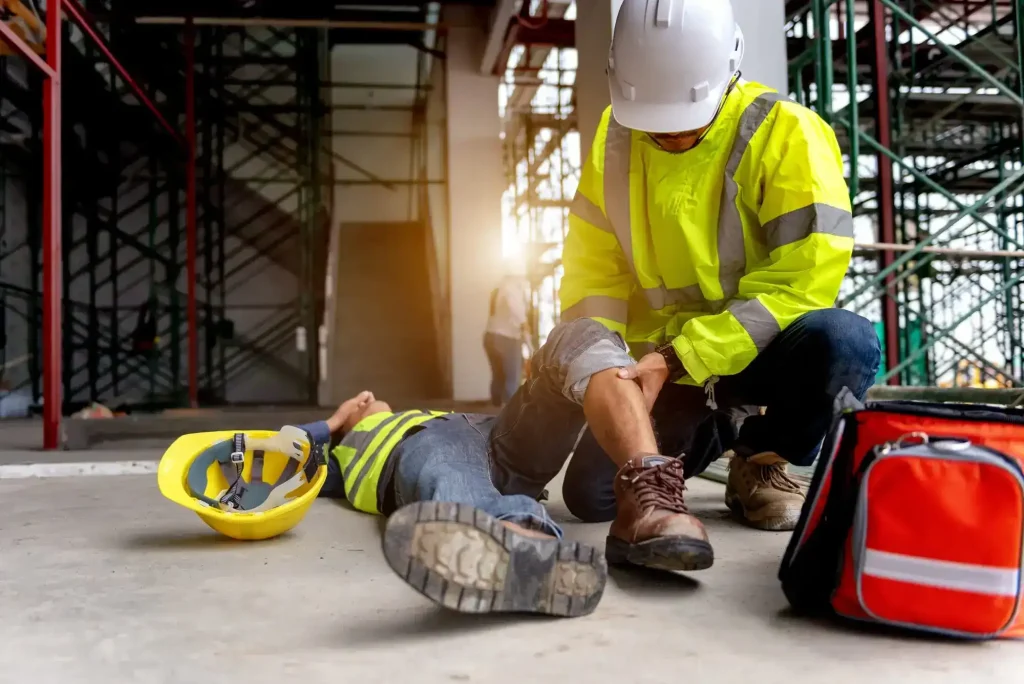
Some jobs place far more cumulative stress on the knee than others. Years of repetitive stress can significantly increase the risk of knee injuries and degenerative conditions. Research has consistently found that occupations involving frequent kneeling, squatting, climbing, and heavy lifting are associated with a significantly higher risk of developing knee osteoarthritis than less physically demanding work.
- Construction work, particularly flooring, roofing, and other trades that require extended kneeling
- Warehouse and distribution work, where twisting while lifting is a common injury mechanism
- Healthcare roles that involve repeated patient transfers and years of standing on hard floors
- Delivery driving, where repeatedly climbing in and out of a vehicle adds up over a full shift
A work-related knee injury claim from any of these fields tends to follow the same evaluation process, though the supporting evidence often looks different depending on whether the injury was sudden or built up gradually.
Building a Strong Knee Injury Claim

The details that matter most depend on which type of workers’ compensation knee injury claim is involved. For a sudden injury, documenting the exact mechanism, what the foot was doing, what was being carried, and which direction the knee twisted gives the claim a specific, credible account rather than a vague description an adjuster can question later.
For a gradual injury, the record that matters most is different. Years of job duties, how often kneeling or squatting was required, and any prior knee complaints all become part of the picture. Being upfront about a pre-existing condition rather than omitting it tends to produce a stronger claim. North Carolina law allows compensation for work-related aggravation of an existing condition. An insurer that discovers an undisclosed prior injury will use it to attack the claim’s credibility instead.
Getting the Right Support for a Knee Injury Claim
A work-related knee injury can affect far more than your ability to perform your job. It can make walking, climbing stairs, kneeling, or standing for long periods difficult, often requiring months of treatment and rehabilitation before you know the full extent of the injury.
Whether your injury happened in a single accident or developed over years of repetitive work, building a successful workers’ compensation claim depends on thorough medical documentation and a clear connection between your condition and your job duties. The stronger that record is from the beginning, the better positioned you are if questions or disputes arise later.
If a workplace knee injury is affecting your ability to work, speak with a workers’ compensation attorney who can explain your rights, protect your claim, and help you pursue the full benefits available under North Carolina law.
Workers’ Compensation
And Family Lawyers
Providing
Strength In A
Time of Crisis
Call US now:
Our Success
Case Results
$80,000
Elbow Injury
$350,000
Arm Injury






Related Posts


reviews
What Real Clients Have To Say
Melissa S.

Lou and his team did an outstanding job on my case. They kept me updated constantly. There were times when I was so overwhelmed-the encouragement I received from the firm is the BEST I’ve received from any law firm in the past. I HIGHLY recommend Lou and his team.
Tim J.
Great attorney helped the most at a important time.
Aimee B.
Lou and his team worked quickly to ensure that my husband received the care and physical therapy he needed after a pretty serious work injury. They handled every phone call and question with the insurance adjuster, we didn’t have to fight with anyone to get anything that was expected or promised. They communicated with us every step of the way, and they were especially responsive and helpful when my husband’s case required more than anyone had anticipated. Every person we have spoken with in Lou’s office were patient and respectful, we never felt like we...
Lucas J.
Very good people to work with! I highly recommend this law firm.
Dustin M.
I have never had a more pleasant experience with an attorney and their paralegals in my life!!! Hands down the best law firm in North Carolina, probably the whole country! Would definitely recommend them to anyone needing counsel. They are all so easy to get along with and friendly.... My employer lied, as many do in this situation but Lou and his team were quick to step in and get me the compensation I deserved! Thank you, from my whole family. Waple and Houk are #1
Darrin R.
Mr. Lou is by far the most compassionate attorney I’ve encountered and once again he helped me with a worker’s compensation claim and his paralegal was also great. Mr.Lou is very professional and he allows you room for your concerns and opinions, he’s just a great human being that doesn’t need to advertise his partnership law firm on tv just ask any of his past clients and they would totally agree with me, God forbid that I’m in a serious car accident but if I am he’s just a phone call away so if you...
Travis B.
Mr. Waple did a fantastic job on my case, even if I wasn't a lot of help he still came through and for that I thank you Mr. Waple.
Tara D.
I was at a point of despair & thought that my then employer would do the right thing. Lou’s honesty, and integrity; along with his guidance gave me the dose of reality that I needed to see the true colors of legality in corporate America. Without his savvy I would have been blindsided! Cherie, always responded to all of my responses, and nervous reactions and made sure Lou was aware of what was happening! Great firm, I would highly recommend to anyone who wants respect, honesty and guidance as a client!
Aunyette S.
Mr.Waple has handled both of my cases very well. I definitely recommend this team of professional lawyers and secretaries. Thank you!
Tashaun H.
My experience working with Lou was an absolute joy. From our very first conversation, he assured me that he would work relentlessly to help me secure adequate compensation for my case and he did just that. His paralegal, Cheri, was helpful with timely responses to any and all questions I had and she helped reduce the stress of a very tedious process. I highly recommend this firm for any future litigation and would love to work with them again if the opportunity arises.