Serving All North Carolina
(704) 954-8697
Hurt at Charlotte Douglas Airport? How Airport Workers’ Comp Works
Connect With Us
09Sep
The logo on an airport badge does not always match the name on the paycheck. At Charlotte Douglas International Airport (CLT), that detail can affect who handles a work injury claim. A ramp agent in an airline uniform may actually work for a regional carrier, contractor, or staffing agency.
Identifying the correct employer is an important early step after an airport injury. A Charlotte workers’ compensation lawyer can help determine who is responsible for the claim and explain what happens next.
Airport workers’ compensation generally follows the same North Carolina laws as other workplace injury claims. However, the physical demands of airport work and the number of employers operating at CLT can create additional complications.

Why Are Airport Workers at Higher Risk of Injury?
Airport work is physical, fast-paced, and often performed around heavy equipment. In 2024, air transportation had 6.5 injury and illness cases per 100 full-time workers, according to the Bureau of Labor Statistics. The rate for private industry overall was 2.3 cases per 100 workers. That makes the reported rate for air transportation nearly three times higher.
CLT’s size adds to the demands placed on airport workers. The airport served 53.6 million passengers in 2025, making it the airport’s second-busiest year on record. As a major connecting hub, CLT depends on workers moving passengers, baggage, aircraft, and equipment throughout the day.
CLT Airport Jobs With a High Risk of Workplace Injury
Many different employees and contractors keep Charlotte Douglas operating. Some jobs involve frequent lifting, moving equipment, repetitive movements, loud environments, or work outdoors in changing weather.
Ramp Agents and Baggage Handlers
Ramp agents and baggage handlers repeatedly lift, carry, and move luggage in tight spaces. On some aircraft, workers may kneel or crouch inside cargo holds while moving bags. Repetitive lifting, twisting, and awkward positioning can place considerable strain on the back, shoulders, and knees.
Airline Ground Crews
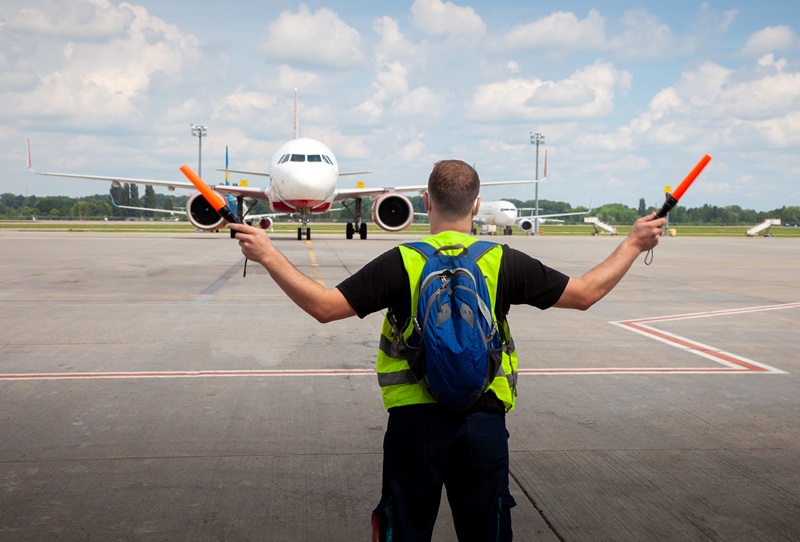
Ground crews drive tugs, operate belt loaders, marshal aircraft, and assist with aircraft pushback. They work around moving vehicles, heavy equipment, jet blast, and loud engines. Rain, heat, cold, and slippery surfaces can create additional hazards on the ramp.
Aircraft and Airport Maintenance Workers
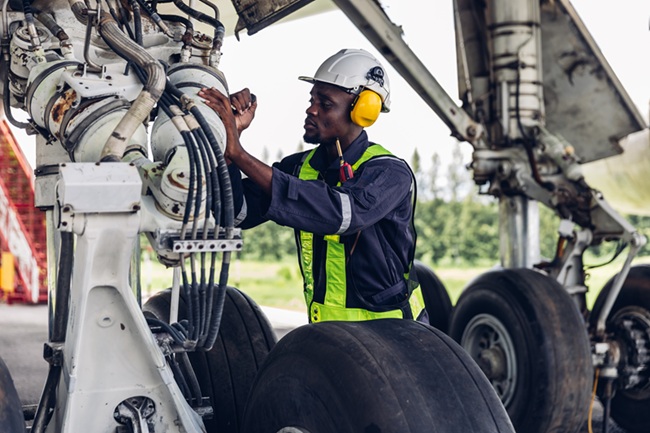
Aircraft mechanics may work on ladders, platforms, and around complex machinery. Facility maintenance crews service jet bridges, escalators, baggage systems, electrical systems, and other airport infrastructure. Their work can involve falls, electrical hazards, machinery, and pinch points.
Airport Contractors and Terminal Workers
Many people working at CLT are employed by private contractors or businesses operating inside the airport. They may provide wheelchair assistance, cleaning, passenger services, security-related services, food service, retail, or other support.
These workers generally pursue workers’ compensation through their actual employer rather than the airport itself. Restaurant workers and retail workers may also face industry-specific risks while working inside the terminal.
Common Airport Workplace Injuries at CLT
Airport workers can face risks from heavy lifting, repetitive movements, moving equipment, loud environments, and changing weather conditions. Common airport workplace injuries include:
- Back strains and herniated discs from lifting and twisting
- Shoulder injuries, including rotator cuff tears, from lifting and overhead work
- Knee injuries from frequent kneeling, crouching, and lifting
- Injuries involving tugs, belt loaders, baggage carts, and other ground equipment
- Slips and falls on wet ramps, spills, or slippery jet bridges
- Occupational hearing loss from repeated exposure to high noise levels
- Heat-related illnesses during hot outdoor shifts
Some airport injuries happen in a single accident. Others, including certain hearing-loss and repetitive-use conditions, may develop over time. North Carolina workers’ compensation law treats occupational diseases and injuries caused by specific accidents differently, so how a condition developed can affect the claim.
Workers dealing with lifting injuries can also read more about work-related back and neck injuries.

Who Pays Workers’ Compensation for an Injury at CLT?
The employer that actually employs you generally provides your workers’ compensation coverage, even when you work alongside employees from several other companies at CLT.
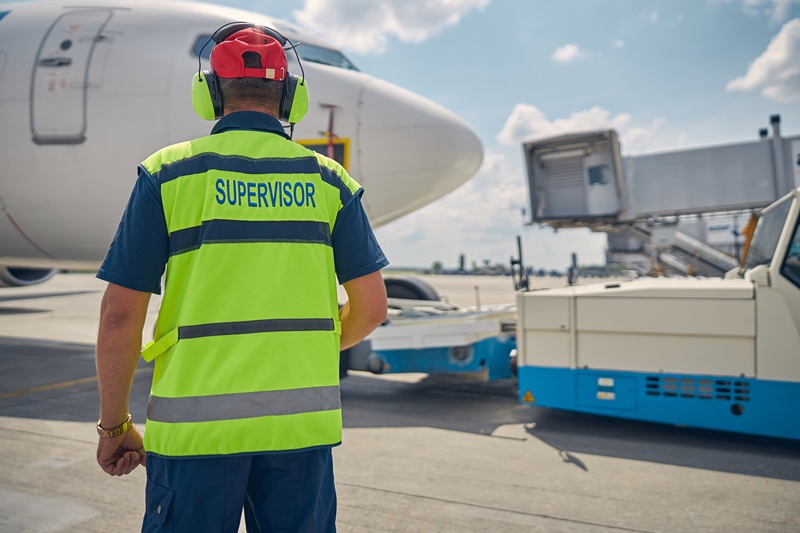
Charlotte Douglas is a shared workplace. Airlines, regional carriers, ground-handling companies, cargo operators, concessionaires, staffing agencies, and other contractors work throughout the airport. The City of Charlotte also employs workers through its Aviation Department.
That can make identifying the responsible employer less obvious than it is at a typical workplace. After an injury, these steps can help establish who should receive your report and handle the claim:
- Check the employer listed on your pay stub or W-2.
- Identify the company that hired you and issues your paycheck.
- Ask your supervisor who handles workers’ compensation claims.
- If you work through a staffing agency, report the injury to the agency and your on-site supervisor.
- Keep copies of every injury report and related communication.
Questions about the employer can become more complicated when a staffing agency, contractor, and another company share responsibility for a worker’s job. A dispute over who employs you should not be ignored because it can affect how the claim proceeds.
City of Charlotte airport employees generally pursue claims under North Carolina’s workers’ compensation system as well. Our guide to workers’ compensation for government employees discusses issues that can arise for public workers.

Do Federal Workers’ Compensation Laws Cover Airport Employees?
Working at an airport does not automatically make someone a federal employee. Most airline employees, contractors, concession workers, and other private-sector CLT employees pursue workplace injury claims under North Carolina workers’ compensation law.
Federal employees are different. TSA officers and certain other federal workers are covered by the Federal Employees’ Compensation Act, with claims administered through the U.S. Department of Labor rather than the North Carolina Industrial Commission.
Knowing who employs you is therefore important not only for identifying the insurer, but also for determining which workers’ compensation system applies.
Can You Have a Third-Party Claim After an Airport Injury?
Sometimes. Workers’ compensation generally addresses an injury through the injured person’s employer, but another company or person may also have caused the accident.
For example, an airline employee could be struck by a tug operated by an employee of a separate ground-handling contractor. The injured worker may have a workers’ compensation claim through their employer and a separate claim against the responsible third party.
These claims follow different rules and may provide different forms of compensation. Our guide to workers’ comp vs. personal injury claims explains the distinction.

What Should You Do After Getting Hurt at CLT?
After an airport workplace injury, report what happened promptly and make sure the correct employer receives notice. North Carolina generally requires injured workers to give their employer written notice within 30 days. A workers’ compensation claim generally must also be filed with the North Carolina Industrial Commission within two years.
After an injury at CLT:
- Report the injury promptly. Tell your supervisor and provide written notice to your employer.
- Confirm who employs you. This can be especially important for contractors, staffing agency workers, and employees working under another company’s branding.
- Get appropriate medical care. Explain how the injury happened and make sure all injured body parts are documented.
- Keep copies of your records. Save injury reports, medical paperwork, work restrictions, and communications with the employer or insurer.
- File the required workers’ compensation paperwork. Form 18 is used to notify the North Carolina Industrial Commission of the claim.
Our workers’ compensation claims process explains what can happen after the initial report, including medical treatment, benefit decisions, and disputes.
Are Injuries in CLT Employee Parking Lots or Shuttles Covered?
Sometimes. Injuries that happen while commuting to or from work are generally excluded under North Carolina’s coming and going rule. Airport employment can create less straightforward situations.
CLT workers may park away from their work area, travel through airport property, or use employee transportation before reaching their assigned location. Whether an injury during that trip is covered can depend on where it happened, who controlled the property or transportation, and why the worker was there.
An injury in an employee lot or on a shuttle should therefore not automatically be treated as an ordinary commuting injury.
What Workers’ Comp Benefits Can Injured CLT Employees Receive?
Airport employees covered by North Carolina workers’ compensation may qualify for benefits based on the nature of their injury and ability to work. Benefits can include medical treatment, partial or total wage replacement, and compensation for certain permanent impairments.
Returning to work can create another issue. An employer may offer modified or light-duty work while an injured employee recovers. Whether the worker must accept the position can depend on the medical restrictions and the job being offered.
Benefits are not automatic simply because an injury happened at work. Employers and insurers may dispute how an accident happened, whether a condition is work-related, or what treatment and benefits are required. Injured workers have options when a workers’ compensation claim is denied.
When to Contact a Charlotte Workers’ Compensation Lawyer After an Airport Injury
Some CLT injury claims are relatively straightforward. Others become complicated when there is uncertainty about the employer, a dispute over medical treatment, pressure to return to work, or disagreement about whether the injury is covered.
Airport injuries can also involve another contractor or company operating at CLT. In those cases, determining whether a third-party claim exists may be just as important as pursuing workers’ compensation benefits.
Waple & Houk helps injured workers throughout Charlotte understand their rights under North Carolina workers’ compensation law. If you were hurt on the ramp, in the terminal, or elsewhere while working at Charlotte Douglas, a Charlotte workers’ compensation lawyer can review what happened and help you determine your next steps.
Hurt at CLT? Get Help With Your Workers’ Comp Claim
Airport injury claims can become complicated when contractors, staffing agencies, or multiple companies are involved.
Schedule Your ConsultationWorkers’ Compensation
And Family Lawyers
Providing
Strength In A
Time of Crisis
Call US now:
Our Success
Case Results
$80,000
Elbow Injury
$350,000
Arm Injury






Related Posts


reviews
What Real Clients Have To Say
Melissa S.

Lou and his team did an outstanding job on my case. They kept me updated constantly. There were times when I was so overwhelmed-the encouragement I received from the firm is the BEST I’ve received from any law firm in the past. I HIGHLY recommend Lou and his team.
Tim J.
Great attorney helped the most at a important time.
Aimee B.
Lou and his team worked quickly to ensure that my husband received the care and physical therapy he needed after a pretty serious work injury. They handled every phone call and question with the insurance adjuster, we didn’t have to fight with anyone to get anything that was expected or promised. They communicated with us every step of the way, and they were especially responsive and helpful when my husband’s case required more than anyone had anticipated. Every person we have spoken with in Lou’s office were patient and respectful, we never felt like we...
Lucas J.
Very good people to work with! I highly recommend this law firm.
Dustin M.
I have never had a more pleasant experience with an attorney and their paralegals in my life!!! Hands down the best law firm in North Carolina, probably the whole country! Would definitely recommend them to anyone needing counsel. They are all so easy to get along with and friendly.... My employer lied, as many do in this situation but Lou and his team were quick to step in and get me the compensation I deserved! Thank you, from my whole family. Waple and Houk are #1
Darrin R.
Mr. Lou is by far the most compassionate attorney I’ve encountered and once again he helped me with a worker’s compensation claim and his paralegal was also great. Mr.Lou is very professional and he allows you room for your concerns and opinions, he’s just a great human being that doesn’t need to advertise his partnership law firm on tv just ask any of his past clients and they would totally agree with me, God forbid that I’m in a serious car accident but if I am he’s just a phone call away so if you...
Travis B.
Mr. Waple did a fantastic job on my case, even if I wasn't a lot of help he still came through and for that I thank you Mr. Waple.
Tara D.
I was at a point of despair & thought that my then employer would do the right thing. Lou’s honesty, and integrity; along with his guidance gave me the dose of reality that I needed to see the true colors of legality in corporate America. Without his savvy I would have been blindsided! Cherie, always responded to all of my responses, and nervous reactions and made sure Lou was aware of what was happening! Great firm, I would highly recommend to anyone who wants respect, honesty and guidance as a client!
Aunyette S.
Mr.Waple has handled both of my cases very well. I definitely recommend this team of professional lawyers and secretaries. Thank you!
Tashaun H.
My experience working with Lou was an absolute joy. From our very first conversation, he assured me that he would work relentlessly to help me secure adequate compensation for my case and he did just that. His paralegal, Cheri, was helpful with timely responses to any and all questions I had and she helped reduce the stress of a very tedious process. I highly recommend this firm for any future litigation and would love to work with them again if the opportunity arises.