Serving All North Carolina
(704) 954-8697
Can You File a Workers’ Comp Claim for Heat Stroke?
Connect With Us
18Aug
Most people picture heat stroke as a summer construction-site problem, something that happens to a roofer or road crew on the hottest afternoon of the year. But workplace heat illness is not limited to outdoor jobs. OSHA data shows that a substantial share of non-fatal occupational heat illnesses occur indoors, including in warehouses, manufacturing facilities, and other workplaces where heat can build up.
Heat stroke and other serious heat-related illnesses can support a North Carolina workers’ compensation claim when the conditions of employment caused or significantly contributed to the illness. A Charlotte workers’ compensation lawyer can help determine whether the worker’s job created the type of heat exposure required for a compensable claim.
Workers’ Compensation for Heat Stroke: Is It a Real Injury?
Heat stroke is a medical emergency, not simply a description of feeling overheated. It occurs when the body can no longer adequately control its temperature and may cause confusion, slurred speech, seizures, or loss of consciousness. Without prompt treatment, severe heat stroke can lead to organ damage, permanent disability, or death.
Heat exhaustion is generally less severe but can cause heavy sweating, nausea, dizziness, weakness, and headache. Without appropriate treatment and cooling, it can progress to heat stroke.
A worker does not need to have a visible physical injury for a heat-related illness to potentially qualify for workers’ compensation in North Carolina. Whether a heat stroke claim is compensable depends on the circumstances of the worker’s employment and whether the job exposed the worker to a greater risk of heat-related illness.

Proving a Workplace Heat Injury Claim: The “Increased Risk” Standard

Hot weather alone does not automatically make a heat-related illness compensable under North Carolina workers’ compensation law. The conditions of the worker’s employment matter. A heat injury may be compensable when the job exposes the worker to a greater risk of excessive heat than the general public would ordinarily face.
That increased risk can come from the physical demands of the job, working near heat-producing equipment, limited ventilation or access to cooling, or protective clothing and equipment that traps body heat. CDC research examining occupational heat-related illness in North Carolina similarly identifies factors such as environmental heat, physical exertion, and clothing or protective equipment as contributors to occupational heat stress.
For a workers’ compensation claim, the question is therefore not simply whether it was hot that day. The worker’s duties and actual working conditions help establish whether the job created the increased heat exposure that led to the illness.
Heat Stroke at Work Isn’t Just an Outdoor Problem

Heat-related illness is not limited to workers who spend their days outside. An OSHA analysis of heat-related illness enforcement cases found that while 80 percent of heat-related fatalities occurred in outdoor work environments, 61 percent of non-fatal heat illness cases occurred during or after work in indoor environments.
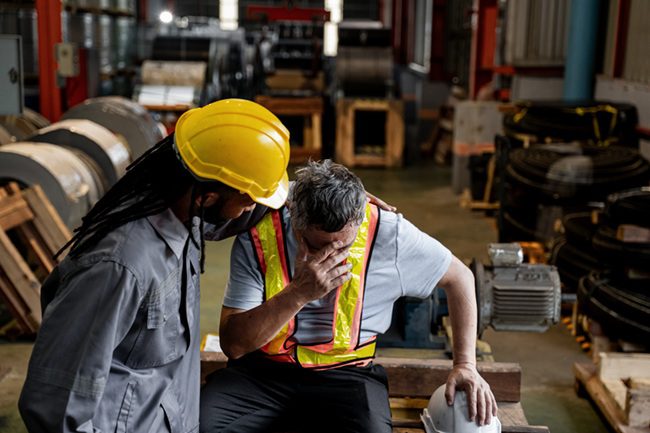
Indoor workers can face significant heat exposure when buildings lack adequate climate control or when machinery and equipment generate additional heat. A warehouse worker moving pallets in a poorly cooled facility, for example, can face heat-related risks without spending the day in direct sunlight. The same can be true for restaurant workers working for extended periods around ovens, grills, dishwashing equipment, and other sources of heat.
What Needs to Be Documented for a Workplace Heat Injury Claim
Because heat and workplace conditions can change quickly, information recorded close to the incident can help establish what the worker was exposed to when symptoms developed. Useful documentation may include:
- Temperature and humidity conditions at the time of the illness, including conditions inside the actual work area
- Whether air conditioning, ventilation, fans, shade, or other cooling measures were available
- Medical records from the initial evaluation, including a core body temperature reading if one was taken
- Access to water and rest or cooling breaks during the shift
- Witness accounts from coworkers who saw the worker become ill or observed the working conditions
- Protective clothing or equipment that may have trapped heat or made it more difficult for the body to cool
This information can become harder to reconstruct as time passes. Weather conditions change, memories of a particular shift can fade, and the conditions inside a warehouse, kitchen, factory, or other workplace may not be reflected by the outdoor temperature alone. Medical records, workplace records, photographs, and witness accounts created or gathered close to the incident can provide a clearer picture of the conditions the worker actually faced.
Heat-Related Illness Workers’ Compensation: What Benefits Are Available?
When a heat-related illness qualifies for workers’ compensation, benefits may include medical treatment for the initial illness and necessary follow-up care. If the worker is unable to return to work during recovery, temporary disability benefits may also be available to replace a portion of lost wages.
Severe heat stroke can sometimes cause lasting complications, including kidney damage, neurological problems, or other limitations that continue after the immediate illness has resolved. When a worker does not fully recover, additional workers’ compensation benefits may be available depending on the nature of any permanent impairment and whether the worker can return to the same job or earn the same wages.
Charlotte’s Seasonal Heat Risk for Outdoor and Indoor Workers
Charlotte’s hot, humid summers can create heat-related risks across a range of workplaces. Research from the Workers Compensation Research Institute found that workplace injury rates increased by approximately 5 to 6 percent on days when temperatures exceeded 90 degrees compared with days between 65 and 70 degrees.
Construction workers performing physical labor outdoors can face prolonged exposure to high temperatures and humidity. Indoor employees are not necessarily protected from the heat, either. Warehouse workers and employees in other facilities without adequate cooling or ventilation may experience significant heat exposure during a shift.
When Heat Exposure at Work Causes a Serious Illness

A workers’ compensation claim involving heat stroke depends on the circumstances surrounding the illness. The temperature alone does not determine whether a claim qualifies. The worker’s physical duties, workplace conditions, protective equipment, access to cooling, and other factors can help establish whether the job created an increased risk of heat-related illness.
Medical evidence is equally important. Some workers recover relatively quickly from heat exhaustion, while severe heat stroke can require hospitalization and lead to lasting complications that affect the ability to return to work. Documentation from the time of the incident can help establish both the conditions the worker faced and how the illness developed.
If you suffered heat stroke or another serious heat-related illness while working, Waple & Houk can review the circumstances of the incident, your medical treatment, and how the condition has affected your ability to work to determine what workers’ compensation benefits may be available.
Injured by Heat Exposure at Work?
If you suffered heat stroke or another heat-related illness on the job, our attorneys can review the circumstances and explain your options under North Carolina workers' compensation law.
Contact Our AttorneysWorkers’ Compensation
And Family Lawyers
Providing
Strength In A
Time of Crisis
Call US now:
Our Success
Case Results
$80,000
Elbow Injury
$350,000
Arm Injury






Related Posts


reviews
What Real Clients Have To Say
Melissa S.

Lou and his team did an outstanding job on my case. They kept me updated constantly. There were times when I was so overwhelmed-the encouragement I received from the firm is the BEST I’ve received from any law firm in the past. I HIGHLY recommend Lou and his team.
Tim J.
Great attorney helped the most at a important time.
Aimee B.
Lou and his team worked quickly to ensure that my husband received the care and physical therapy he needed after a pretty serious work injury. They handled every phone call and question with the insurance adjuster, we didn’t have to fight with anyone to get anything that was expected or promised. They communicated with us every step of the way, and they were especially responsive and helpful when my husband’s case required more than anyone had anticipated. Every person we have spoken with in Lou’s office were patient and respectful, we never felt like we...
Lucas J.
Very good people to work with! I highly recommend this law firm.
Dustin M.
I have never had a more pleasant experience with an attorney and their paralegals in my life!!! Hands down the best law firm in North Carolina, probably the whole country! Would definitely recommend them to anyone needing counsel. They are all so easy to get along with and friendly.... My employer lied, as many do in this situation but Lou and his team were quick to step in and get me the compensation I deserved! Thank you, from my whole family. Waple and Houk are #1
Darrin R.
Mr. Lou is by far the most compassionate attorney I’ve encountered and once again he helped me with a worker’s compensation claim and his paralegal was also great. Mr.Lou is very professional and he allows you room for your concerns and opinions, he’s just a great human being that doesn’t need to advertise his partnership law firm on tv just ask any of his past clients and they would totally agree with me, God forbid that I’m in a serious car accident but if I am he’s just a phone call away so if you...
Travis B.
Mr. Waple did a fantastic job on my case, even if I wasn't a lot of help he still came through and for that I thank you Mr. Waple.
Tara D.
I was at a point of despair & thought that my then employer would do the right thing. Lou’s honesty, and integrity; along with his guidance gave me the dose of reality that I needed to see the true colors of legality in corporate America. Without his savvy I would have been blindsided! Cherie, always responded to all of my responses, and nervous reactions and made sure Lou was aware of what was happening! Great firm, I would highly recommend to anyone who wants respect, honesty and guidance as a client!
Aunyette S.
Mr.Waple has handled both of my cases very well. I definitely recommend this team of professional lawyers and secretaries. Thank you!
Tashaun H.
My experience working with Lou was an absolute joy. From our very first conversation, he assured me that he would work relentlessly to help me secure adequate compensation for my case and he did just that. His paralegal, Cheri, was helpful with timely responses to any and all questions I had and she helped reduce the stress of a very tedious process. I highly recommend this firm for any future litigation and would love to work with them again if the opportunity arises.