Serving All North Carolina
(704) 954-8697
Hurt Working at a Charlotte Hotel? Your Workers’ Comp Rights
Connect With Us
19Sep
A hotel housekeeper may lift mattress corners dozens of times during a single shift. A banquet worker may carry heavy trays for hours. Hotel jobs can put repeated strain on the back, shoulders, knees, and hands.
When that work leads to an injury, determining whether North Carolina workers’ compensation applies is not always straightforward. Some injuries result from a specific accident. Others develop gradually and may raise different coverage questions. A Charlotte workers’ compensation lawyer can evaluate how the injury happened and which benefits may apply.
Hotel workers’ compensation can cover employees throughout the property, from housekeepers and cooks to maintenance workers and overnight desk clerks. The risks differ by job, and certain hotel injury claims involve wage, staffing, and employer questions that can complicate a claim.

Are Hotel Workers Covered by Workers’ Comp in North Carolina?
In most cases, yes. North Carolina generally requires businesses with three or more employees to carry workers’ compensation insurance. Coverage can include full-time, part-time, and seasonal hotel employees.
Coverage does not depend simply on where an injury occurs. A compensable injury generally must have the required connection to the employee’s work. Injuries caused by a specific workplace accident may qualify, while conditions that develop gradually can involve different legal standards.
Why Are Hotel Workplace Injuries So Common?
Charlotte’s hospitality industry keeps thousands of people working in hotels and related businesses. In 2025, Mecklenburg County visitors spent a record $6.47 billion and supported 38,380 tourism jobs. Conventions, business travel, sporting events, and tourism keep hotel employees moving through busy shifts.
The physical demands can be substantial. A study of U.S. hotel workers found an overall rate of 5.2 injuries per 100 workers, with housekeepers experiencing the highest rate at 7.9 per 100 workers. Lifting, pushing, repetitive movements, wet floors, hot kitchens, chemicals, and interactions with guests can all contribute to workplace injuries.

Common Hotel Worker Injuries in Charlotte
Hotel employees perform very different jobs under one roof. The injuries they face often reflect the physical demands and hazards of each role.
What Injuries Are Common Among Hotel Housekeepers?
Housekeepers may clean many rooms during a single shift, often under tight time demands. They lift mattresses, push loaded carts, reach overhead, and kneel to clean bathrooms. Common injuries and conditions include:
- Lower back strains and herniated discs
- Shoulder injuries from lifting and reaching
- Knee injuries from kneeling and repetitive movement
- Wrist and hand problems from repetitive tasks
- Skin or respiratory conditions linked to cleaning chemicals
Some back and neck injuries or shoulder injuries happen during a specific accident. Others develop over time. How the condition developed can affect whether it qualifies for workers’ compensation under North Carolina law.

Hotel Kitchen and Banquet Worker Injuries
Hotel kitchens and banquet operations can become especially busy during conventions, weddings, and large events. Cooks and other employees may suffer burns from fryers, ovens, hot surfaces, and steam. Knife cuts, falls on wet or greasy floors, and lifting injuries are also common.
Depending on the circumstances, burn injuries at work can require significant medical treatment and time away from the job. Hotel kitchen employees face many of the same workplace hazards as other restaurant workers.

Hotel Employee Slips and Falls
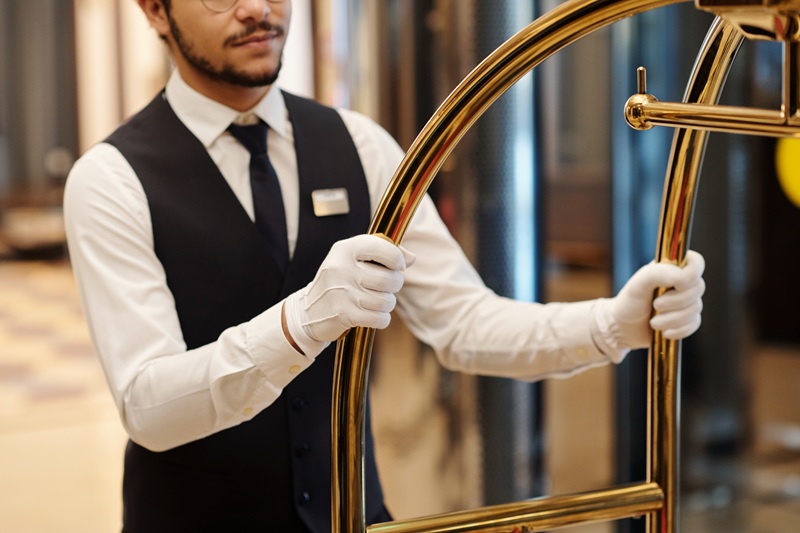
Wet lobby floors, spilled drinks, pool decks, loose rugs, and cluttered service areas can create fall hazards throughout a hotel. Bellhops, banquet staff, housekeepers, and maintenance employees may also be injured on stairs, loading docks, or other back-of-house areas.
For workers’ compensation purposes, the important question is not whether a guest could also have slipped on the same hazard. The issue is whether the employee’s injury arose out of and occurred in the course of the job.
Are Hotel Employees Covered After an Assault at Work?
Front desk clerks, night auditors, and security employees may work alone or interact with intoxicated, aggressive, or threatening guests. Robberies and other assaults can cause both physical and psychological injuries.
Workers’ compensation may apply when an assault has a sufficient connection to the employee’s work. Psychological effects can also raise separate coverage questions. North Carolina places specific requirements on workers’ comp claims involving stress and anxiety, so experiencing anxiety after a workplace assault does not automatically establish a compensable claim.
How Do Tips Affect Workers’ Comp Benefits for Hotel Employees?
North Carolina wage-replacement benefits are generally based on an injured worker’s average weekly wage. For hotel employees who receive tips, calculating that wage can become more complicated.
Room service servers, bartenders, bellhops, valet attendants, and other tipped employees may earn a relatively small base wage while receiving a significant portion of their income through tips. If the wage calculation does not accurately reflect that income, the worker’s weekly benefit may be lower than expected.
Whether tip income is included can depend on how the money was earned and documented. Tips reported through payroll or reflected on tax records are generally easier to establish than unreported cash income. Service charges and pooled tips can create additional questions about what should count as earnings.
The employer may use Form 22 to report an employee’s earnings before the injury. Because those figures can affect the worker’s average weekly wage and benefit rate, discrepancies deserve attention early. Similar proof issues can arise when an employee is paid partly in cash.

What Can Complicate a Hotel Workers’ Comp Claim?
Hotel employees generally face the same workers’ compensation deadlines as other North Carolina workers. Written notice of an injury is generally required within 30 days, and a Form 18 claim is generally subject to a two-year filing deadline.
Those deadlines can become more difficult to navigate when an injury develops gradually, a worker has irregular earnings, or it is unclear which company actually employs the worker. North Carolina’s injury notification requirements and Form 18 requirements still apply, while the broader workers’ comp claims process can depend on how the injury and employment relationship are classified.
Who Is the Employer at a Franchise or Staffed Hotel?
The hotel name above the entrance does not necessarily identify the injured worker’s employer. A Charlotte hotel may operate under a national brand while being owned or managed by another company. Housekeeping, banquet, maintenance, or other employees may also work through outside staffing companies.
Those arrangements can matter when determining which employer and insurance carrier are responsible for a workers’ compensation claim. The company issuing the paycheck is an important piece of that analysis, but it may not resolve every employment question.
Another company’s involvement can matter for a different reason. If a guest, contractor, equipment manufacturer, or other third party causes the injury, the worker may have rights beyond workers’ compensation. A third-party claim can sometimes exist alongside workers’ comp, depending on who caused the injury and their relationship to the worker.

Can a Hotel Fire You for Filing a Workers’ Comp Claim?
Hotel employees may worry that reporting an injury will cost them hours, shifts, or even their job. North Carolina law prohibits employers from retaliating against workers because they pursue workers’ compensation benefits. However, filing a workers’ comp claim does not provide unlimited job protection.
Returning to work can create another issue. A hotel may offer a temporary position within the employee’s medical restrictions, such as folding linens or handling phones instead of cleaning rooms. Whether the position qualifies as suitable light-duty work can affect wage benefits. Refusing an offered position without understanding those consequences can create problems for a claim.

When Should an Injured Hotel Worker Talk to a Workers’ Comp Lawyer?
Some hotel injury claims are relatively straightforward. Others become complicated because of how hospitality work is structured.
Questions may arise when an injury develops over time, reported tips are missing from the wage calculation, or a staffing company is involved. The same is true when an employee receives unexpected work restrictions, is offered questionable light duty, loses shifts after reporting an injury, or learns that the claim has been denied.
Waple & Houk helps injured hotel and hospitality workers in Charlotte determine how North Carolina workers’ compensation law applies to their circumstances. A workers’ compensation lawyer can review the employment arrangement, medical issues, and benefit questions that may affect the claim.
Hurt at a Charlotte Hotel Job?
Waple & Houk can help you understand your workers' comp rights and address issues affecting your claim.
Discuss Your InjuryWorkers’ Compensation
And Family Lawyers
Providing
Strength In A
Time of Crisis
Call US now:
Our Success
Case Results
$80,000
Elbow Injury
$350,000
Arm Injury





Related Posts

reviews
What Real Clients Have To Say
Melissa S.

Lou and his team did an outstanding job on my case. They kept me updated constantly. There were times when I was so overwhelmed-the encouragement I received from the firm is the BEST I’ve received from any law firm in the past. I HIGHLY recommend Lou and his team.
Tim J.
Great attorney helped the most at a important time.
Aimee B.
Lou and his team worked quickly to ensure that my husband received the care and physical therapy he needed after a pretty serious work injury. They handled every phone call and question with the insurance adjuster, we didn’t have to fight with anyone to get anything that was expected or promised. They communicated with us every step of the way, and they were especially responsive and helpful when my husband’s case required more than anyone had anticipated. Every person we have spoken with in Lou’s office were patient and respectful, we never felt like we...
Lucas J.
Very good people to work with! I highly recommend this law firm.
Dustin M.
I have never had a more pleasant experience with an attorney and their paralegals in my life!!! Hands down the best law firm in North Carolina, probably the whole country! Would definitely recommend them to anyone needing counsel. They are all so easy to get along with and friendly.... My employer lied, as many do in this situation but Lou and his team were quick to step in and get me the compensation I deserved! Thank you, from my whole family. Waple and Houk are #1
Darrin R.
Mr. Lou is by far the most compassionate attorney I’ve encountered and once again he helped me with a worker’s compensation claim and his paralegal was also great. Mr.Lou is very professional and he allows you room for your concerns and opinions, he’s just a great human being that doesn’t need to advertise his partnership law firm on tv just ask any of his past clients and they would totally agree with me, God forbid that I’m in a serious car accident but if I am he’s just a phone call away so if you...
Travis B.
Mr. Waple did a fantastic job on my case, even if I wasn't a lot of help he still came through and for that I thank you Mr. Waple.
Tara D.
I was at a point of despair & thought that my then employer would do the right thing. Lou’s honesty, and integrity; along with his guidance gave me the dose of reality that I needed to see the true colors of legality in corporate America. Without his savvy I would have been blindsided! Cherie, always responded to all of my responses, and nervous reactions and made sure Lou was aware of what was happening! Great firm, I would highly recommend to anyone who wants respect, honesty and guidance as a client!
Aunyette S.
Mr.Waple has handled both of my cases very well. I definitely recommend this team of professional lawyers and secretaries. Thank you!
Tashaun H.
My experience working with Lou was an absolute joy. From our very first conversation, he assured me that he would work relentlessly to help me secure adequate compensation for my case and he did just that. His paralegal, Cheri, was helpful with timely responses to any and all questions I had and she helped reduce the stress of a very tedious process. I highly recommend this firm for any future litigation and would love to work with them again if the opportunity arises.