Serving All North Carolina
(704) 954-8697
Workers’ Comp for Spinal Cord Injuries: What North Carolina Law Covers
Connect With Us
08Jul
A spinal cord injury does not just take someone out of work for a few weeks. Depending on where along the spine the damage occurred, it can permanently change what kind of work a person is physically able to do at all. North Carolina’s workers’ compensation system recognizes that difference. It treats the most severe spinal injuries differently than almost any other type of claim.
Like most workers’ compensation claims, spinal cord injury cases begin with the same basic framework: medical treatment, wage replacement benefits, and, when possible, a return to work. Workers’ compensation claims for spinal cord injuries diverge from that framework when a full return to work is not realistic. Because these claims often involve catastrophic injuries and substantial long-term benefits, working with a Charlotte workers’ compensation lawyer early in the process can help protect your rights and preserve important evidence.

What Qualifies as a Spinal Cord Injury Claim
Most spinal cord injuries at work happen through an identifiable accident. A fall, a vehicle collision, a heavy object striking the back or neck. That identifiable event generally makes the initial compensability question more straightforward than it is with a repetitive stress injury, where symptoms often develop gradually over months or years.
Not every spinal cord injury is immediately obvious, however. Some workers leave the accident scene believing they escaped serious injury, only to develop numbness, weakness, or other neurological symptoms over the following hours or days. Prompt medical evaluation and documentation are important, even if symptoms seem mild at first.
Workers’ Comp Benefits for Spinal Cord Injuries
The benefits available for a spinal cord injury follow the same general categories as other compensable workplace injuries, but the amounts and duration often look very different given the severity involved.
- Medical treatment, including emergency care, surgery, imaging, and the long-term rehabilitation spinal injuries often require
- Temporary total disability, paid at two-thirds of average weekly wage while the worker cannot work at all
- Permanent partial disability, rated according to the specific body part and degree of impairment involved
- Vocational rehabilitation, when the injury rules out returning to the prior job but not to work in general
For less severe spinal cord injuries that respond to treatment and allow an eventual return to work, this standard framework generally applies throughout the claim. While recovery often takes longer than it does for many other workplace injuries, these cases typically follow the same workers’ compensation process for medical treatment, wage replacement, and return-to-work planning.

How NC Law Treats Severe Workplace Spinal Injuries
Severe spinal cord injuries involving significant paralysis fall into a different category under North Carolina law. General Statute 97-29 creates a presumption of permanent and total disability for spinal injuries involving severe paralysis of both arms, both legs, or the trunk. That classification matters enormously.
Most North Carolina workers’ compensation claims are subject to a 500-week cap on wage replacement benefits. A worker who qualifies for permanent total disability under this provision is not subject to that cap. Benefits, including medical compensation, continue for the worker’s lifetime unless the employer can show, by a preponderance of the evidence, that the worker is capable of returning to suitable employment. This is the detail that separates a catastrophic spinal cord injury claim from a typical serious injury claim.
Common Causes of Spinal Injuries in The Workplace
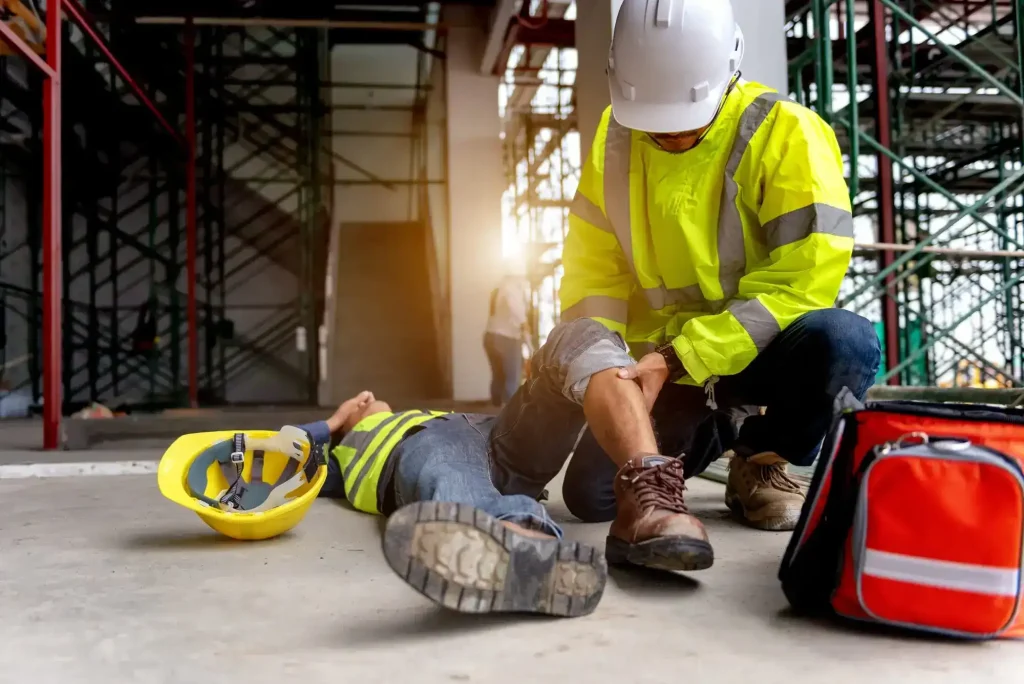
Nationally, vehicle crashes and falls are the two leading causes of spinal cord injury, closely followed by acts of violence and sports or recreational activities. Workplace spinal injuries tend to mirror that pattern closely.
- Falls from height, particularly common on construction sites and around scaffolding
- Vehicle collisions during work travel or delivery routes
- Heavy equipment or machinery incidents in warehouses and manufacturing settings
- Lifting injuries that combine with an underlying spinal vulnerability to cause more severe damage than the same motion would in a healthy spine
Not every workplace spinal cord injury results from a dramatic fall or catastrophic accident. A lower-height fall, a vehicle collision, or a heavy object striking the back or neck can all cause serious spinal damage, or even brain injury, depending on the force and angle of impact. For more information about workplace back and neck injuries, including conditions that may not involve spinal cord damage, read our guide to back and neck injuries at work.
The Claims Process for a Catastrophic Spinal Injury

A work-related spinal cord injury claim involving significant paralysis tends to draw far more scrutiny from insurers than a routine claim. The financial exposure is so much greater. Expect independent medical examinations, close review of every treatment note, and disputes over whether the worker’s condition genuinely meets the severe paralysis standard.
The “capable of returning to suitable employment” language in the statute is where many of these disputes concentrate. An insurer may argue a worker could perform some form of sedentary work despite significant physical limitations, even when the practical reality of finding and sustaining that kind of job is far more complicated than a medical file suggests. Vocational evidence, not just medical evidence, often becomes central to resolving that argument.
Getting Support After a Workplace Spinal Cord Injury
A spinal cord injury claim asks the workers’ compensation system to do more than pay medical bills and replace a few weeks of wages. It asks the system to account for a future that may look permanently different than the one a worker had planned. North Carolina law does account for that, but only when a claim is built to reflect the actual severity of the injury from the start.
That means thorough documentation from the first hospital visit forward, and consistent follow-up with specialists. Where the injury is severe enough, it also means a clear record connecting the diagnosis to the specific legal standard the statute requires. Workers dealing with a spinal cord injury are often managing more urgent things than paperwork in the first weeks after the injury. That is exactly when some of the most important documentation gets missed.
If a workplace spinal cord injury is affecting your ability to work, get your case reviewed by someone who understands how these claims are actually valued and what the statute allows for.
Workers’ Compensation
And Family Lawyers
Providing
Strength In A
Time of Crisis
Call US now:
Our Success
Case Results
$80,000
Elbow Injury
$350,000
Arm Injury





Related Posts


reviews
What Real Clients Have To Say
Melissa S.

Lou and his team did an outstanding job on my case. They kept me updated constantly. There were times when I was so overwhelmed-the encouragement I received from the firm is the BEST I’ve received from any law firm in the past. I HIGHLY recommend Lou and his team.
Tim J.
Great attorney helped the most at a important time.
Aimee B.
Lou and his team worked quickly to ensure that my husband received the care and physical therapy he needed after a pretty serious work injury. They handled every phone call and question with the insurance adjuster, we didn’t have to fight with anyone to get anything that was expected or promised. They communicated with us every step of the way, and they were especially responsive and helpful when my husband’s case required more than anyone had anticipated. Every person we have spoken with in Lou’s office were patient and respectful, we never felt like we...
Lucas J.
Very good people to work with! I highly recommend this law firm.
Dustin M.
I have never had a more pleasant experience with an attorney and their paralegals in my life!!! Hands down the best law firm in North Carolina, probably the whole country! Would definitely recommend them to anyone needing counsel. They are all so easy to get along with and friendly.... My employer lied, as many do in this situation but Lou and his team were quick to step in and get me the compensation I deserved! Thank you, from my whole family. Waple and Houk are #1
Darrin R.
Mr. Lou is by far the most compassionate attorney I’ve encountered and once again he helped me with a worker’s compensation claim and his paralegal was also great. Mr.Lou is very professional and he allows you room for your concerns and opinions, he’s just a great human being that doesn’t need to advertise his partnership law firm on tv just ask any of his past clients and they would totally agree with me, God forbid that I’m in a serious car accident but if I am he’s just a phone call away so if you...
Travis B.
Mr. Waple did a fantastic job on my case, even if I wasn't a lot of help he still came through and for that I thank you Mr. Waple.
Tara D.
I was at a point of despair & thought that my then employer would do the right thing. Lou’s honesty, and integrity; along with his guidance gave me the dose of reality that I needed to see the true colors of legality in corporate America. Without his savvy I would have been blindsided! Cherie, always responded to all of my responses, and nervous reactions and made sure Lou was aware of what was happening! Great firm, I would highly recommend to anyone who wants respect, honesty and guidance as a client!
Aunyette S.
Mr.Waple has handled both of my cases very well. I definitely recommend this team of professional lawyers and secretaries. Thank you!
Tashaun H.
My experience working with Lou was an absolute joy. From our very first conversation, he assured me that he would work relentlessly to help me secure adequate compensation for my case and he did just that. His paralegal, Cheri, was helpful with timely responses to any and all questions I had and she helped reduce the stress of a very tedious process. I highly recommend this firm for any future litigation and would love to work with them again if the opportunity arises.